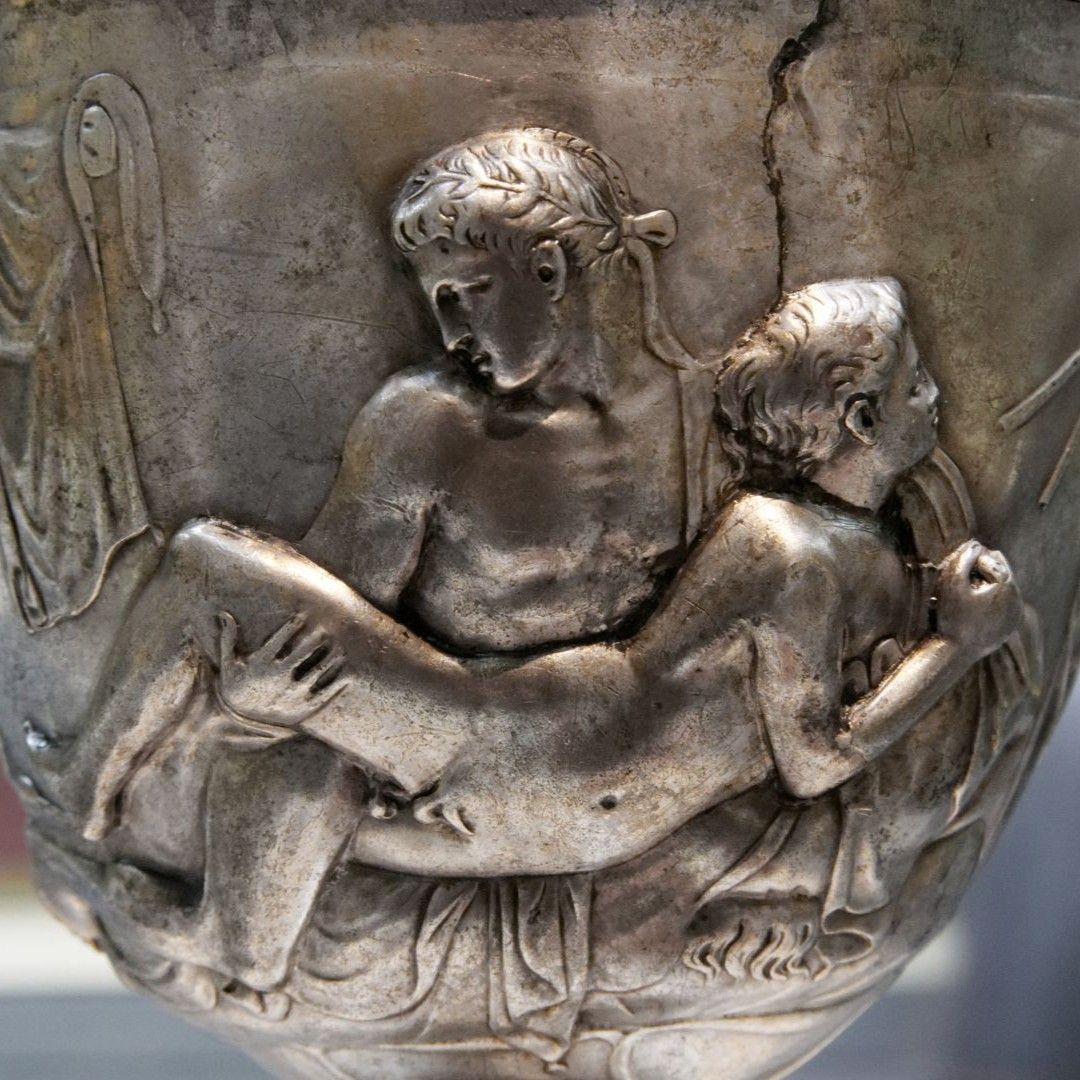
The Homosexual Role
Mary McIntosh
The current conceptualization of homosexuality as a condition is a false one, resulting from ethnocentric bias. Homosexuality should be seen instead as a social role. Anthropological evidence shows that this role does not exist in all societies, and where it does, it is not always the same as in modern Western societies. Historical evidence shows that the role did not emerge in England until toward the end of the seventeenth century. Evidence from the Kinsey Reports demonstrates that, despite the existence of the role in our society, much homosexual behavior occurs outside the recognized role, and the polarization between the heterosexual man and the homosexual man is far from complete.
Recent advances in the sociology of deviant behavior have not yet significantly influenced the study of homosexuality, which is still commonly seen as a condition characterizing certain persons in the way that birthplace or deformity might characterize them. The limitations of this view become clearer when we examine its implications. If homosexuality is a condition, then people either have it or they do not. Many scientists and laypersons assume that there are two kinds of people in the world: homosexuals and heterosexuals. Some recognize that homosexual feelings and behavior are not confined to those they classify as "homosexuals," and that some of these individuals do not engage in homosexual behavior. This presents a critical problem, but instead of addressing it, they retain their assumption and puzzle over how to determine whether someone is "really" homosexual.
Laypeople may discuss whether a certain person is "queer" in much the same way they might turn to scientists or medical professionals for a more definitive diagnosis. Scientists, for their part, often feel obligated to establish diagnostic criteria. For instance, one psychiatrist has written:
"...I do not diagnose patients as homosexual unless they have engaged in overt homosexual behavior. Those who also engage in heterosexual activity are diagnosed as bisexual. An isolated experience may not warrant the diagnosis, but repetitive homosexual behavior in adulthood, whether sporadic or continuous, designates a homosexual."(1)
This definition introduces the notion of a third type of person, the "bisexual," to account for the fact that behavior patterns cannot be conveniently dichotomized into heterosexual and homosexual. However, this approach does not resolve the conceptual problem, as bisexuality is still seen as a condition (except perhaps as a temporary response to unusual situations, such as confinement in a one-sex prison). Furthermore, bisexuality is rarely given extended discussion and is typically mentioned briefly before moving on to the consideration of "true homosexuality."
In cases where behavior or feelings do not align with the diagnosis, other writers have referred to an "adolescent homosexual phase" or have used terms such as "latent homosexual" or "pseudo-homosexual." One of the earliest studies on the subject, by Krafft-Ebing, distinguished between the "invert" (congenitally homosexual) and others who, while behaving similarly, were not true inverts.(2)
A second consequence of conceptualizing homosexuality as a condition is that research has predominantly focused on its etiology. There has been much debate about whether the condition is innate or acquired. Researchers have often started by selecting a sample of "homosexuals," similar to how medical researchers might study diabetics. Yet, after decades of studies, the results remain inconclusive, and the question is still largely a matter of opinion, much as it was when Havelock Ellis published Sexual Inversion over seventy years ago. (3) The failure of research to answer this question is not due to a lack of scientific rigor or inadequate evidence but rather stems from the fact that the wrong question is being asked. Attempting to trace the etiology of "homosexuality" is as misguided as tracing the etiology of "committee-chairmanship" or "Seventh-Day Adventism."
The vantage point of comparative sociology reveals that the conception of homosexuality as a condition is itself a valid object of study. This conception, and the behaviors it supports, operates as a form of social control in a society where homosexuality is condemned. Furthermore, the uncritical acceptance of this conception by social scientists can be attributed to their focus on homosexuality as a social problem. They have often adopted the popular definition of the problem and, in doing so, become complicit in the processes of social control.
The practice of socially labeling individuals as deviant functions in two ways as a mechanism of social control. (4) First, it establishes a clear and publicized threshold between permissible and impermissible behavior, preventing individuals from easily drifting into deviant behavior. Their initial deviations prompt consideration of a full transition into a deviant role, with all the associated sanctions. Second, labeling segregates deviants from others, thereby containing their deviant practices and self-justifications within a relatively narrow group.
A specialized, despised, and punished role of homosexual keeps the bulk of society pure in rather the same way that the similar treatment of some kinds of criminals helps keep the rest of society law-abiding. However, the disadvantage of this practice as a technique of social control is that there may be a tendency for people to become fixed in their deviance once they have become labeled. This, too, is a process that has become well-recognized in discussions of other forms of deviant behavior such as juvenile delinquency and drug taking and, indeed, of other kinds of social labeling such as streaming in schools and racial distinctions.
One might expect social categorizations of this sort to be to some extent self-fulfilling prophecies: if the culture defines people as falling into distinct types—black and white, criminal and non-criminal, homosexual and normal—then these types will tend to become polarized, highly differentiated from each other. Later in this paper, I shall discuss whether this is so in the case of homosexuals and "normals" in the United States today.
It is interesting to notice that homosexuals themselves welcome and support the notion that homosexuality is a condition. For just as the rigid categorization deters people from drifting into deviancy, so it appears to foreclose on the possibility of drifting back into normality and thus removes the element of anxious choice. It appears to justify the deviant behavior of the homosexual as being appropriate for him as a member of the category. The deviancy can thus be seen as legitimate for him, and he can continue in it without rejecting the norms of the society.
The way in which people become labeled as homosexual can now be seen as an important social process connected with mechanisms of social control. It is important, therefore, that sociologists should examine this process objectively and not lend themselves to participation in it, particularly since, as we have seen, psychologists and psychiatrists on the whole have not retained their objectivity but become involved as diagnostic agents in the process of social labeling. (6)
It is proposed that the homosexual should be seen as playing a social role rather than as having a condition. The role of "homosexual," however, does not simply describe a sexual behavior pattern. If it did, the idea of a role would be no more useful than that of a condition. For the purpose of introducing the term "role" is to enable us to handle the fact that behavior in this sphere does not match popular beliefs: that sexual behavior patterns cannot be dichotomized in the way that the social roles of homosexual and heterosexual can.
It may seem rather odd to distinguish in this way between role and behavior, but if we accept a definition of role in terms of expectations (which may or may not be fulfilled), then the distinction is both legitimate and useful. In modern societies where a separate homosexual role is recognized, the expectation, on behalf of those who play the role and of others, is that a homosexual will be exclusively or very predominantly homosexual in his feelings and behavior.
In addition, there are other expectations that frequently exist, especially on the part of non-homosexuals, but affecting the self-conception of anyone who sees himself as homosexual. These are: the expectation that he will be effeminate in manner, personality, or preferred sexual activity; the expectation that sexuality will play a part of some kind in all his relations with other men; and the expectation that he will be attracted to boys and very young men and probably willing to seduce them. The existence of a social expectation, of course, commonly helps to produce its own fulfillment. But the question of how far it is fulfilled is a matter for empirical investigation rather than a priori pronouncement.
Some of the empirical evidence about the chief expectation—that homosexuality precludes heterosexuality—in relation to the homosexual role in America is examined in the final section of this paper. (7)
In order to clarify the nature of the role and demonstrate that it exists only in certain societies, we shall present the cross-cultural and historical evidence available. This raises awkward problems of method because the material has hitherto usually been collected and analyzed in terms of culturally specific modern Western conceptions.
For example, Marc Daniel tries to refute accusations of homosexuality against Pope Julian II by producing four arguments: the Pope had many enemies who might wish to blacken his name; he and his supposed lover, Alidosi, both had mistresses; neither of them was at all effeminate; and the Pope had other men friends about whom no similar accusations were made.8 In other words, Daniel is trying to fit an early sixteenth-century Pope to the modern conception of the homosexual as effeminate, exclusively homosexual, and sexual in relation to all men. The fact that he does not fit is, of course, no evidence, as Daniel would have it, that his relationship with Alidosi was not a sexual one.
Anthropologists too can fall into this trap. Marvin Opler, summarizing anthropological evidence on the subject, writes:
"Actually, no society, save perhaps Ancient Greece, pre-Meiji Japan, certain top echelons in Nazi Germany, and the scattered examples of such special status groups as the berdaches, Nata slaves, and one category of Chuckchee shamans, has lent sanction in any real sense to homosexuality."(9)
Yet he goes on to discuss societies in which there are reports of sanctioned adolescent and other occasional "experimentation."
In the Northwest Amazon, for instance, it is stated that "true homosexuality among the Cubeo is rare if not absent," as evidenced by the absence of reports about males with persistent homosexual patterns. (10) Despite potential weaknesses in these observations, the Human Relations Area Files remain the most comprehensive source of comparative information on the subject. Ford and Beach (11) have summarized this evidence, identifying two broad accepted patterns of homosexuality: the institutionalized homosexual role and the liaison between men or boys who are otherwise heterosexual.
One of the most recognized forms of institutionalized homosexuality is the distinct role of the berdache or transvestite. According to Ford and Beach, this is "the commonest form of institutionalized homosexuality," bearing similarities to corresponding phenomena in modern society, though sometimes even more pronounced. Among the Mohave Indians of California and Arizona, for example, both an alyhă (a male transvestite who assumed the role of a woman in sexual intercourse) and a hwame (a female homosexual who assumed the role of a man) were recognized. (12) These roles were believed to be innate, with signs of such proclivities appearing in a mother's dreams during pregnancy. A young boy displaying feminine behavior and interest in women's activities would undergo an initiation ceremony, officially becoming an alyhă. From then on, the individual would dress and act as a woman, be referred to as "she," and could even marry men as "husbands."
Although the Mohave viewed the alyhă as a regrettable yet amusing figure, they neither condemned nor ostracized them. Instead, the attitude was, "he was an alyhă, he could not help it." In contrast, the alyhă's "husband," an ordinary man who might have chosen an alyhă for their reputed housekeeping skills or supposed luck in love, often became the subject of relentless teasing and jokes. This stark division between the feminine, passive homosexual and the masculine, active partner—largely absent in contemporary Western societies (13) —is notably significant in the Middle East. There, however, neither role is perceived as being innate. The passive partner, seen as demeaning themselves through feminine submission, is despised and ridiculed, while the active partner generally escapes scorn.
In many ancient Middle Eastern cultures, including among the Jews before the Babylonian exile, male temple prostitutes were a recognized institution. (14) These examples illustrate that even societies acknowledging distinct homosexual roles may define and interpret them differently than contemporary Western cultures.
In numerous other societies, homosexual relationships are part of a broader sexual framework, often confined to specific life stages. Among the Aranda of Central Australia, for example, long-term relationships between unmarried men and young boys, starting around ages ten to twelve, were common. (15) This bears resemblance to practices in classical Greece, where older men could simultaneously maintain wives. In other cases, such as among the Siwans of North Africa, (16) homosexual activity was not restricted by age and was a standard expectation for men and boys throughout life. Despite the prevalence of homosexual behavior in these societies, they did not conceptualize individuals as "homosexuals."
Addressing historical material poses further methodological challenges compared to anthropological studies. History tends to focus on notable events rather than recurring patterns. However, some medieval records, such as attempts to curtail sodomy among clergy, (17) suggest the practice's prevalence. Similarly, the term "catamite," meaning "boy kept for immoral purposes," emerged in 1593, further indicating its commonality. Nonetheless, historical references to homosexuality typically concern prominent individuals or scandals.
Over the past seventy years, scholars have sought to trace the history of sexuality, (18) piecing together insights from their findings and omissions. Studies of English history before the seventeenth century often center on inconclusive speculation about figures like Edward II, Christopher Marlowe, and William Shakespeare. These debates remain unresolved not due to insufficient evidence but because none of these individuals conform to modern stereotypes of homosexuality.
By the late seventeenth century, however, references to homosexuals as a distinct type and the emergence of a rudimentary homosexual subculture—primarily in London—began to appear. Early descriptions of homosexuals did not align precisely with contemporary conceptions. Effeminacy, especially transvestism, was emphasized to such an extent that homosexuality and transvestism were initially indistinguishable. (19)
Endnotes:
- Irving Bieber, "Clinical Aspects of Male Homosexuality," in Judd Marmor (ed.), Sexual Inversion (New York: Basic Books, 1965), p. 248.
- R. von Krafft-Ebing, Psychopathia Sexualis (1889).
- Later published in H. Ellis, Studies in the Psychology of Sex, Vol. 2 (New York: Random House, 1936).
- Edwin Lemert, Social Pathology (New York: McGraw-Hill, 1951), ch. 4, "Sociopathic Individuation."
6 Talcott Parsons, The Social System, New York: Free Press, 1951, pp. 292-293.
7 For evidence that many self-confessed homosexuals in England are not effeminate and many are not interested in boys, see Michael Schofield, Sociological Aspects of Homosexuality, London: Longmans, 1965.
8 Marc Daniel, "Essai de méthode pour l’étude des aspects homosexuels de l’histoire," Arcadie, 133 (January, 1965), pp. 31-37.
9 Marvin Opler, "Anthropological and Cross-Cultural Aspects of Homosexuality," in Marmor (editor), op. cit., p. 174. - Ibid., p. 117.
- C. S. Ford and F. A. Beach, Patterns of Sexual Behavior, New York: Harper, 1951, ch. 7.
- George Devereux, "Institutionalized Homosexuality of the Mohave Indians," Human Biology, Vol. 9, 1937, pp. 498–527; reprinted in Hendrik M. Ruitenbeek (ed.), The Problem of Homosexuality in Modern Society, New York: Dutton, 1963.
- Gordon Westwood, A Minority, London: Longmans, 1960, pp. 127–134.
- Gordan Rattray Taylor, "Historical and Mythological Aspects of Homosexuality," in Marmor, op. cit.; Fernando Henriques, Prostitution and Society, Vol. 1, London: MacGibbon and Kee, 1962, pp. 341–343.
- Ford and Beach, op. cit., p. 132.
- Ibid., pp. 131–132.
- Geoffrey May, Social Control of Sex Expression, London: Allen and Unwin, 1930, pp. 65 and 101.
- Notable works include Havelock Ellis, Sexual Inversion, London: Wilson and Macmillan, 1897; Iwan Bloch (E. Dühring pseud.), Sexual Life in England Past and Present, English translation, London: Francis Aldor, 1938; Gordon Rattray Taylor, Sex in History, London: Thames and Hudson, 1953; Noel I. Garde, Jonathan to Gide: The Homosexual in History, New York: Vantage, 1964.
- Dr. Evelyn Hooker suggested that in periods without institutionalized homosexual subcultures, homosexuals might exhibit more conspicuous behavior as other means of connection were unavailable.
The Dolphin Who Loved Me
In the 1960s, Margaret Lovatt was part of a Nasa-funded project to communicate with dolphins. Soon she was living with ‘Peter’ 24 hours a day in a converted house.
LGBT in 19th-Century Serbia
Many Turks, especially the more respected and wealthy, kept Serbian young men as lovers, so-called adžuvans or đojlens, who served for money. Even the honorable vizier had a whole bunch of them, and a special official oversaw them.
Van Gogh’s ‘The Starry Night’ Aligns With Science
A new analysis by physicists based in China and France suggests the artist had a deep, intuitive understanding of the mathematical structure of turbulent flow.