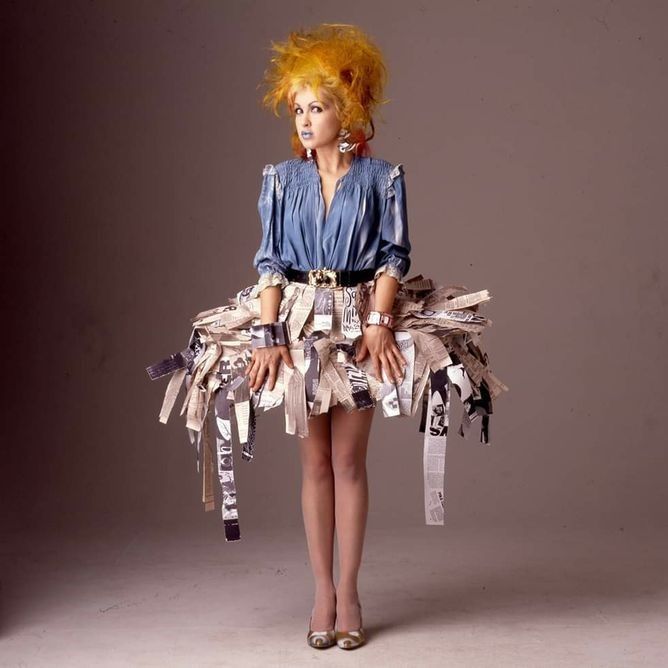
Cyndi Lauper: A Traumatic Childhood, A Hard Job
Danas Online
Cyndi Lauper is over 70 years old and has decided to end her stage performances with a grand farewell tour.
The tour is symbolically named the Girls Just Wanna Have Fun Farewell Tour, and 11 performances have already been scheduled in Europe, with the final concert set for Accor Arena in Paris on Friday, February 28, 2025.
In addition to the French capital, the American artist plans to visit Glasgow, London, Belfast, Budapest, Prague, and Berlin.
In a major interview with The Guardian, Lauper revealed many details about her life, talking about the documentary she made, Trump, and the ruthless music industry.
This singer is the subject of Let the Canary Sing, a new film by Alison Ellwood. The film follows Lauper from her difficult childhood with an abusive stepfather, through the New York music scene and early bands, to the release of the feminist anthem Girls Just Want to Have Fun, and beyond.
There are conflicts with music directors who do not understand her artistic sensibility and want to compete with Madonna. Then there is the career break. The visible pop career. Cyndi still works, is an activist, and an author of award-winning musicals.
How was it to make the film?
"The good news is that it’s not a thriller, and she survives at the end," says Lauper with a laugh.
This week in the UK, she has a sold-out concert at the Royal Albert Hall, performs at Glastonbury, and has a farewell tour starting later this year. She might have a few more concerts after that, she says, but there will be no more arena tours.
Lauper says she didn’t see the point of making a film at first. Then she thought about the women’s consciousness-raising groups from the 1970s.
"They would all learn from each other. Women of all ages would gather and tell their stories... For a young artist, the only thing I would want them to know is not to give up, right?"
That has always been her motto. "You have to wait for your day? Big deal. It will come if you don’t give up. Dig in, look around, see how to prepare. Another gatekeeper? I’ll just go around him and keep going because there’s always a way."
She sounds combative and determined – and she is – but in her 2012 memoir, Lauper also writes that she never felt good enough and was plagued by self-doubt.
"I realized," she writes, "that maybe I would never feel that my work was good enough." Does she still feel that way? "Yeah, are you kidding? I have panic attacks because I think I won’t be good enough, but you just keep going, keep trying, and stay determined. The only thing I know is that when I sing and lose myself in the moment, it’s like heaven, like you’re free. You sing to fly, to be something else, to go anywhere your imagination can take you."
Childhood in Queens
Cyndi Lauper grew up in Queens, New York, in an apartment below her grandparents, an old Sicilian family.
Her father was a shipping company clerk, and her mother a waitress. When Lauper was about five years old, her parents divorced, and her mother then married a man who was physically abusive.
Once, as a teenager, Lauper caught him peeking through the keyhole while she was bathing, and shortly after, she left home, taking only the basics – a toothbrush, spare underwear, an apple, and a copy of Yoko Ono’s book Grapefruit with instructions and drawings. This book, she writes, "became my window to viewing life through art." (An example from the book: "Listen to the sound of the earth turning.")
Lauper lived with her sister on Long Island, surviving on spaghetti and short-term jobs, and spent a few years wandering – busking in New York, attending art college in Vermont – before joining the first of several bands and singing in local clubs.
She also worked as a stripper to earn money for band equipment but got tired of the humiliation. She quit.
Around the same time, she says she experienced a serious sexual assault. A bandmate attacked her and two women in his apartment. It left her stunned and resurfaced years later in therapy.
By the time Cyndi Lauper signed a record deal with the band Blue Angel, she was under 30 years old.
The band didn’t do well, but the label executives persuaded Cyndi to go solo. When she finally agreed, she had to fight her former manager in court and went bankrupt – but as a poor artist, Lauper didn’t have much to lose. The judge in the case ruled in Lauper’s favor, saying, "Let the canary sing," which became the title of the documentary.
The New Barbra Streisand and Other Attempts
Record company producers initially wanted Cyndi to become the new Barbra Streisand.
"Look, you already had Streisand," she says now. Then they decided she would compete with Madonna, whose debut album in 1983 was released a few months earlier and did well. "As if you can only have one successful woman. What the hell?" says Lauper. "That woman entertained us for years. She made great pop songs. I want to be competitive, but not pitted against another woman. I’m not for that."
Lauper often clashed with music directors. Would she have had a different career if she had been more flexible? "Yeah, I probably would have, but I wouldn’t be who I am. I don’t know what that path would have been. Maybe it would have been easier for a while, but I wanted to learn. And, honestly, I always wanted to be a great artist."
In her memoirs, the music industry of the 1980s sounds horribly sexist. She laughs. "You think it’s not sexist now?" At the beginning of her career, it wasn’t so bad, she says, because her label boss, Lennie Petze, "wasn’t like that. When he left, it was like, oh my God." They told her to try wearing jeans and a t-shirt (in true Lauper style, she deconstructed the shirt, tearing it and adding chains). "I remember once walking in, and the guy looked me up and down, staring at my breasts and face and smiling. It was really disgusting."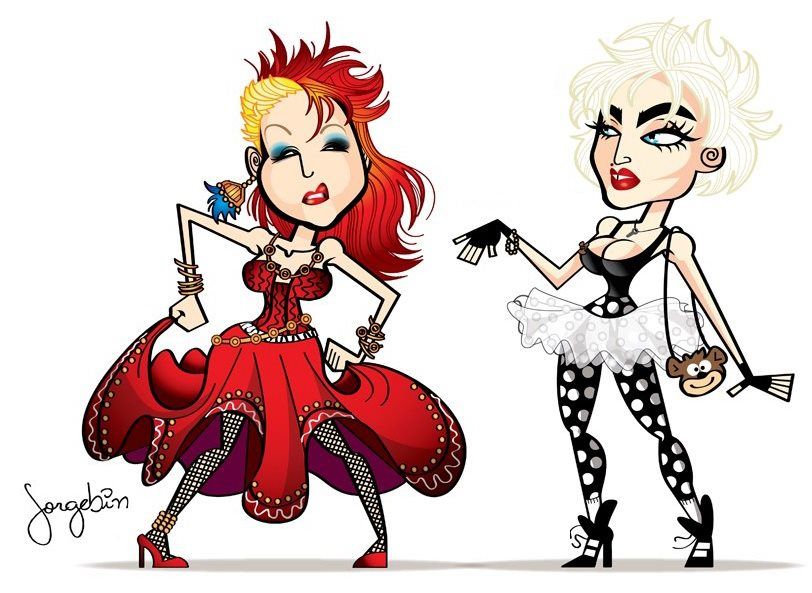
Girls Just Want to Have Fun
Her first album, She’s So Unusual, contained hit after hit, many of which she wrote herself, including Time After Time and She Bop. She didn’t write Girls Just Want to Have Fun, but she changed the lyrics and the feel of the song, and it became a huge hit. Suddenly she became famous, but also isolated. She toured, but managers always kept her isolated from others.
"So you sit alone, and you hear the band and everyone outside laughing and having a good time." At concerts, she was greeted with hysteria. She was famous and met celebrities, but didn’t socialize with them. The audience adored her because she didn’t know self-censorship, always saying what she thought. On a tour in Italy, influenced by her Italian family, she told reporters that the biggest oppressors of women were the church, family, and government.
Her second album, _True Color_s, was released in 1986. Cyndi felt exhausted – from the hype and demanding promotional tour, but also from the grief of losing close friends to the AIDS epidemic. She was recovering from endometriosis surgery and had been in therapy for several years.
She wanted to write political songs but was told she couldn’t, even though she pointed out that her rendition of Girls Just Want to Have Fun was political. (Lauper was strongly influenced by second-wave feminism and wanted to create an exciting song that celebrated female joy.)
Activist
The executives couldn’t see past the fun video and cheerful sound; one told her she made "disposable" pop. Did she feel that people didn’t take her seriously as an artist? "I knew my audience recognized it," she says.
The song became a call to action in the US from June 2022, when Roe v. Wade was overturned – a ruling that guaranteed women the right to abortion. That year, Lauper founded the Girls Just Want to Have Fundamental Rights Fund, donating money to organizations supporting women’s healthcare and access to abortion.
"We don’t have autonomy," she says. "We pay the same taxes as any man, and he has autonomy, and we don’t. How does that suit you? How does it feel to have the government control your body? It doesn’t feel good to me. I want to be free and have the same civil liberties as any other person in my country, and then we have equality. If we’re not all equal, then none of us really are because it can always turn against you."
She sighs. "When they close clinics, they close postnatal care, prenatal care, there’s a high mortality rate among African American women who die during pregnancy, or after it, or the baby dies. I don’t understand what’s happening in this country."
When she appeared on Celebrity Apprentice in 2010, Donald Trump was still just a brash TV figure; Lauper even wrote nice things about him in her book. And now?
"We have a strange policy," she says, "that if you’re a convict, you can’t vote, but apparently you can run for president." The division worries her. "I still feel in my heart that people are fair, and when they’re not, it’s because they don’t have all the information, or they’re angry because they were lied to."
When the Career Stops
Cyndi's second album didn't fare as well as her debut, although the title song, True Colors, was a hit—it also became an anthem for the LGBTQ+ community, and two decades later, Lauper co-founded the True Colors United organization to support homeless LGBTQ+ youth. Her third album, "A Night to Remember," was released in 1989 but stalled her career. It received minimal promotion from her record label, which seemed to lose interest in her.
What kept her going? "I thought, if you want to be a true artist, you accept it and move on." She wrote songs for the musical "Working Girl," based on the 1988 movie, and there's a line in it that she likes.
"Where I come from, you take a hit, fix your hair, and get back up," she says.
"That's kind of the way I've lived. You fall, you get back up, with every failure you learn something important because life is for learning. You don't come into the world knowing everything, and if you did, what fun would that be? What's the point?"
Living for Change
Lauper has reinvented herself multiple times. She won an Emmy Award in 1995 for her role in the TV series_ Mad About You_. She made a dance album, then a blues album, then a country album, and supported Tina Turner and Cher on tour. She transitioned to writing for theater, and the musical _Kinky Boot_s, for which she wrote the music and lyrics, opened in 2012 and then moved to Broadway the following year; Lauper won a Tony Award for Best Score. Working Girl is set to premiere next year, and she might write another album.
But for now, there's her farewell tour, which will be a celebration.
"I want to thank all the people who have followed me from one album to another. I just want to say goodbye in a fun way that will make them feel like they're at a party."
Lauper has survived it all—a difficult childhood, traumatic experiences, a ruthless industry. "I just think you keep going and find the little things that make you happy. The things you think are the absolute end of the world really aren't; they're just the end of that chapter, and there are many chapters in your life. A friend once told me that, and I didn't understand it, but now I do."
Online edition of the daily newspaper Danas, 26. 6. 2024.
Portrait of a Faith-Plumber
If science and technology have enabled the creation of a human being without sex through artificial insemination (‘immaculate conception’), one may expect that they will one day also enable the disappearance of the human being without death.
The Seductive Emptiness of Form
Wilde’s incisive reflections on false social morality perhaps have an even more piercing effect today, in a contemporary society where the boundaries between lies and truths have become still more fragile and porous, and where the obsession with bodily beauty and youth is far more tragic
Bolet and Marie – cryptoqueer Norwegian photography pioneers
The photography exhibition Bolette Berg and Marie Høeg, organised by the Center for Queer Studies, was held at the European House from 15 to 19 December 2025.