Freud Plus Marx Equals Surrealism
Dragana Nikoletić
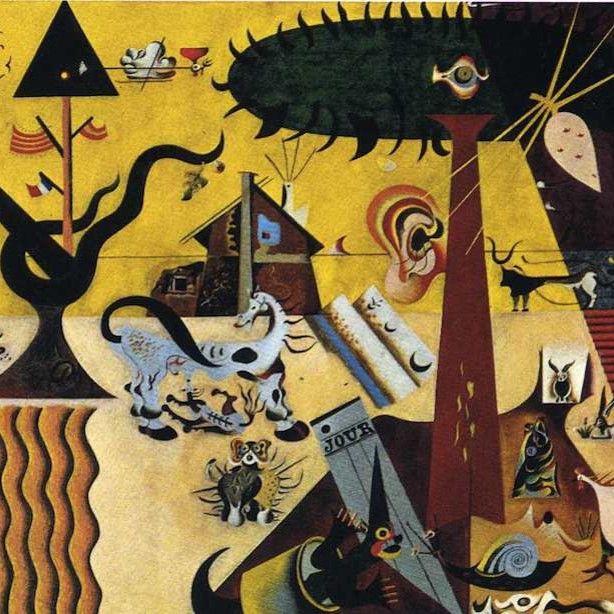
It has been a full century since the famous French poet and critic Andre Breton coined the Surrealist Manifesto, celebrating the irrational and imaginative as opposed to logic, rules, and the dominant, stereotypical ways of thinking. From our perspective, it is interesting that, almost simultaneously with Pablo Picasso, Giorgio de Chirico, Salvador Dalí, and others, progressive ideas were also being expressed by local artists such as Marko Ristić, Dušan Matić, Nikola Vučo, Oskar Davičo, Milan Dedinac, Stevan Živadinović – Vane Bor, Koča Popović, and many other creators.
It is precisely about this synchronicity, as well as about the next century of surrealist activities in our region, that the exhibition Activity: 100 Years of Surrealism, organized at the Museum of Contemporary Art in Belgrade, speaks. The author of the concept and curator of the exhibition, Sanja Bahun, professor and dean of the Faculty of Arts and Humanities at the University of Essex, brings the readers of Radar closer to the historical frameworks and principles of this avant-garde phenomenon, born between the two world wars.
Doubting the Stable and Unchangeable
"In that time of great intellectual, social, technological, and political upheaval, all phenomena considered 'stable' and 'unchangeable' were questioned in order to examine the very nature of man and his role in the world," Bahun explains. On the other hand, "thoughts intensified on what could be done to change class relations, what kind of culture should express this new era, and how to relate to heritage," the professor notes.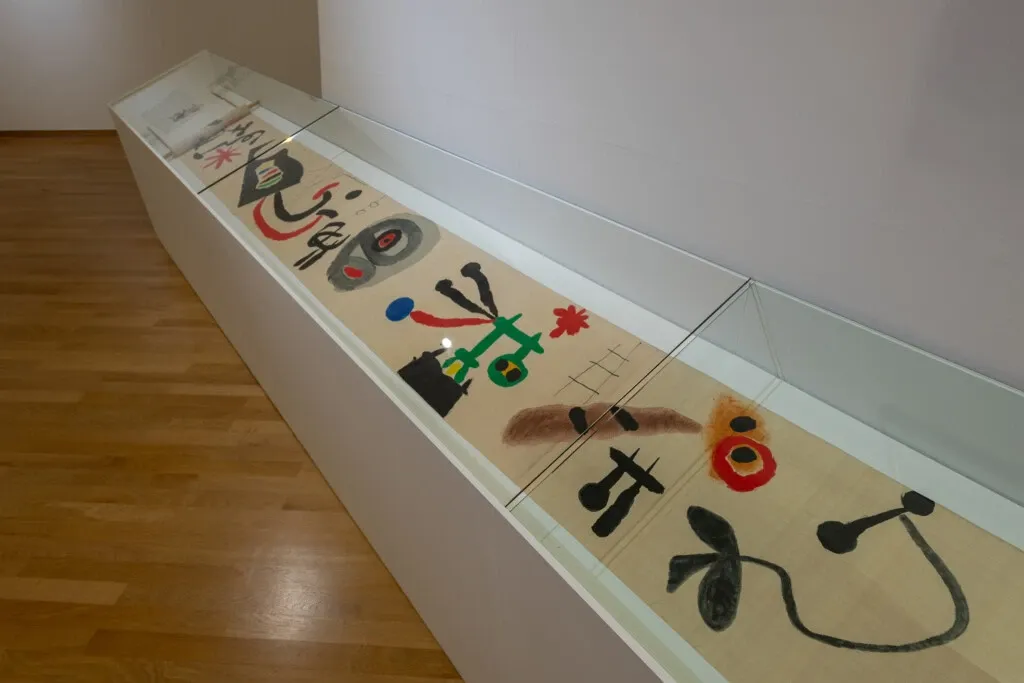 Photo: Bojana Janjić/MSUB
"When I teach this subject to my students, I give them a formula—Freud plus Marx equals Surrealism," she says, emphasizing the figures whose teachings the surrealists expanded upon, believing that by expressing their inner potentials, the world really "could become a better place."
Intoxicating like a (artistic) revolution, the movement spread from France to all parts of the world, manifesting in three different interactive forms that drastically changed the cultural scene in the "occupied" countries. Alongside "classical" genres like painting and drawing, artistic processes included collage, collecting and using objects and materials from daily life (ready-mades, etc.), while artists also engaged in public space interventions, self-reflection through artistic installations, and many other previously unseen activities.
Writers would build on each other's work through a method of transliteration, playing with the rules of language and spelling, creating bizarre textual artifacts as a result.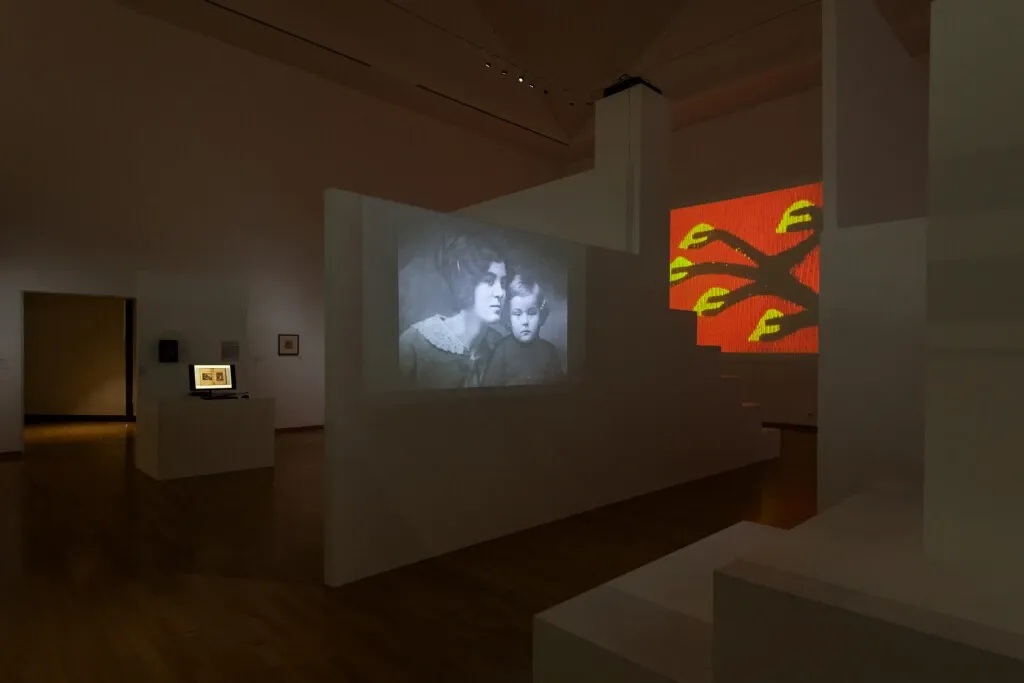 Photo: Bojana Janjić/MSUB
Images and poetry combined, the theater platform was conquered by performances of strange characters, caught in even stranger actions. Performance entered the interpretation of philosophical texts, and collecting flourished, despite or perhaps because of the growing militarization of societies.
Dream Universes
"Surrealism took a critical stance towards reality, especially through collective manifestations, reacting to the state of society and the ruling culture," Bahun continues. Expressed as a philosophical thought, surrealism connected aesthetics, ethics, epistemology, political philosophy, metaphysics, and anti-metaphysics, as well as anthropology, ethnography, cultural history, psychoanalysis, and other scientific disciplines, according to our interviewee.
In these circumstances, entire universes were created from dreams, fantasies, and the secrets of the subconscious. The entrenched belief that artists are untouched by this world (as some kind of "eccentrics") could not change overnight, even though the actors were very politically aware and ready to react at any moment. And it was on such a wild ride along uncharted paths that the aforementioned and other local creators, celebrated by the current exhibition, joined.
The surrealists had great faith in the future, in youth, which also implied the future of art. They believed, as Matić often emphasized, that new generations would always bring a new (artistic) language that corresponds to the new era.
The layout of the exhibition at MSU appropriately introduces the audience to this world of organized madness, distinct from Dadaism in its desire for constructive criticism of reality, as opposed to the proverbial negation of everything typical of the previous movement. This means that everything offered by Ristić, Matić, Vučo, Dedinac... had a concrete purpose of social change, through self-improvement.
In contrast to the diversity of their poetics, the exhibition is compact, occupying the museum space from the second to the fourth floor. The connective tissue is geometry, present in the form of orderly partitions, tunnels, staircases, niches, and even an amphitheater, all illuminated by the whiteness of the environment. White is fitting to highlight the many achievements of our surrealists, insufficiently known to us for various reasons, which are open for further consideration.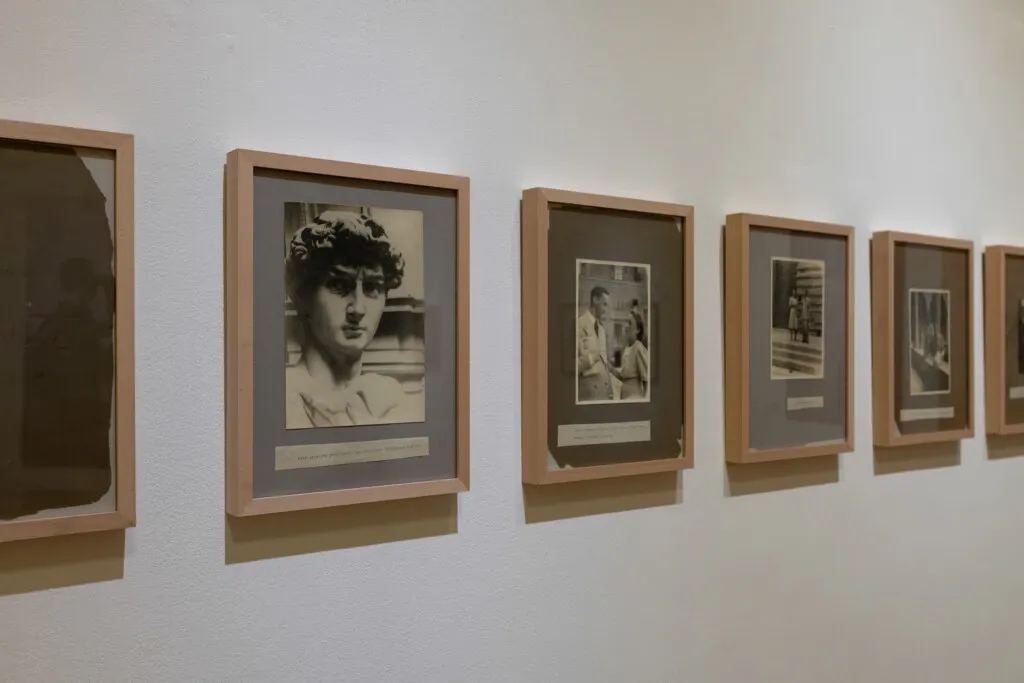 Photo: Bojana Janjić/MSUB
Since much of this movement took place through the verbal, the exhibition is rich in documentation. Various brochures, catalogs, sketchbooks, written correspondence among members of the Belgrade group and those outside it, as well as almanacs, different versions of manifestos… are mostly arranged on simplified (white) display tables. There is also a type of improvised archival shelf, with compartments holding biographies of nearly forgotten advocates for a fairer society, allowing the visitor to pull them "out of the drawers" and "rearrange" (art) history.
Dice Blocks and White Swans
On the white walls, besides drawings, paintings, collages, and photographs, screens are also displayed, showing footage of surrealists' struggle for that better tomorrow, which, despite the higher goal, defies "common" sense: in the ballet performance The Maid's Broom (Atelje 212, 1960), several dancers are dressed as dice blocks (or craps), for example, while there are also traditional "white swans" in the cast. In assemblages, a newly introduced sculptural technique of collaging different objects, objects and portraits merge as actors in "absurd" situations that do not occur in everyday life.
Both our and foreign surrealist photographers are drawn to empty night scenes, symbols of loneliness, as well as cemeteries. Some (Marko Ristić, the leader and main ideologist of the Belgrade branch of the movement) create their own Rorschach blots, delving into their unconscious, while the titles are also a significant part of the works (for example, Mother Courage Falters by Nives Kavurić Kurtović), hinting at absurdities.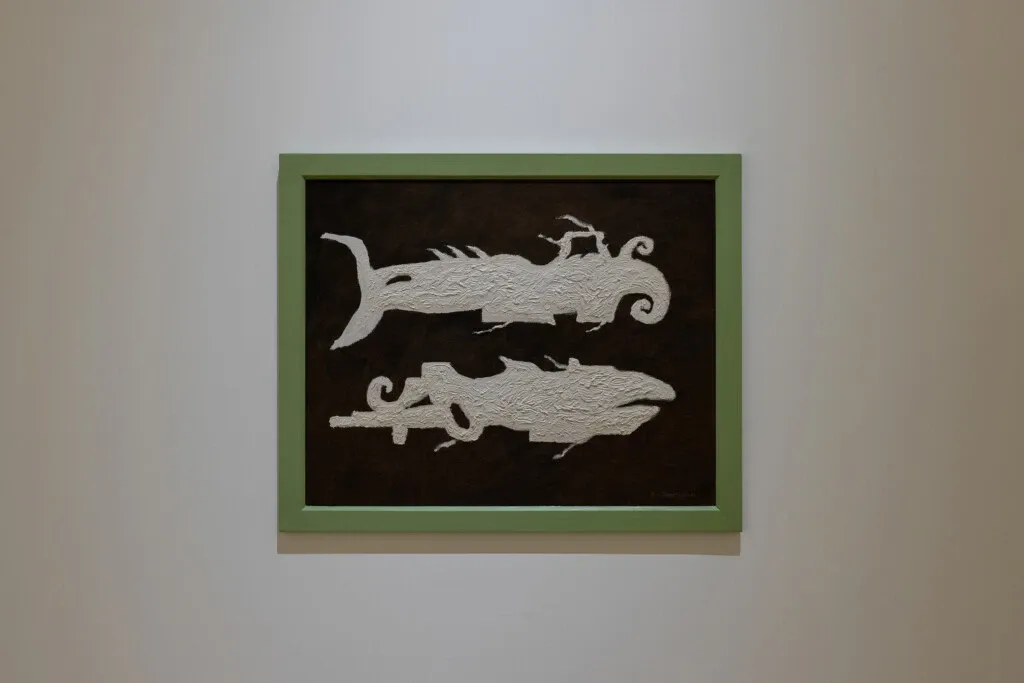 Photo: Bojana Janjić/MSUB
From many corners, sometimes artificially created with partition walls, the reading of poems can be heard, and this is also in the "tunnel," where the poem Public Bird by Milan Dedinac is displayed, with prints of the verses as well as their dramatic recitation via speakers. It is both attractive and educational, so it can be concluded that the MSU clientele has not seen an exhibition like this in a long time.
However, not only because of the scale of the exhibition but also due to the potential lack of understanding of its message, which is entirely understandable given the nature of the movement, it is advisable to visit it with expert guidance so that everything "falls into place." We ask the curator about the reason for the simultaneous rise of the surrealist wave here and worldwide.
French Students
"Some of the reasons are quite pragmatic: our interwar surrealists mostly matured as 'French students,' evacuated from here during World War I. Besides their native language, they were exceptionally proficient in French and German, so they could easily communicate with like-minded people, and as frequent visitors to Paris or more permanently settled here, they were surrealists even before the publication of Breton's Manifesto," Bahun explains.
Inspired by revolutionary changes in Europe and the world, by the late twenties, they were writing against imperialism and the need to decolonize thought. They were heavily invested in the Spanish Civil War, on the Republican side, and involved in the art and literature of surrealists there, forming some connections with Czech, Romanian, and other members of avant-garde currents.
"They breathed the same air, absorbed the same atmosphere, and asked the same questions from their own temporal and political positions, as a leftist artistic and social movement in monarchical Yugoslavia," the professor emphasizes.
Our interwar surrealists mostly matured as "French students," evacuated from here during World War I. Besides their native language, they were exceptionally proficient in French and German, so they could easily communicate with like-minded people.
The main creative levers became activism (hence the name of the exhibition), interaction with the audience (as works "only come to life"), belief in the power of transformation through art, and expanding the audience circle to the broadest popular masses. Therefore, they addressed children, the elderly, and people with disabilities.
Is it possible for a similar historical moment to appear again, we ask our interlocutor, convinced that the 20th century brought so much that the 21st could not even come close in terms of art.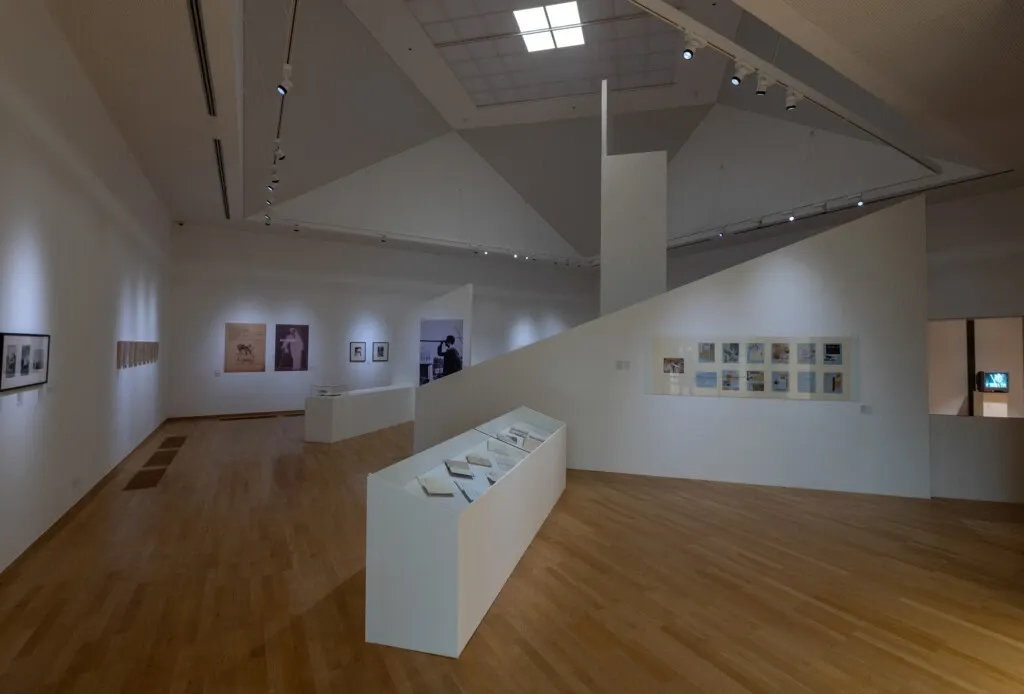 Photo: Bojana Janjić/MSUB
"The surrealists had great faith in the future, in youth, which also implied the future of art. They believed, as Matić often emphasized, that new generations would always bring a new (artistic) language that corresponds to the new era. So, there will be new breakthroughs, new art, because it always emerges anew in response to material—historical events," the curator "promises."
This is further demonstrated by the selection of contemporary artists who employ surrealist techniques or draw inspiration from surrealist thought, but in a fresh, modern way that resonates with the present moment. This adds an additional layer to the display of the original transmitters of this movement’s ideas in Serbia, particularly in Belgrade. The exhibit also includes works by renowned international surrealists, from Picasso to Joan Miró and Man Ray, showing no discernible difference in the intensity of expression.
The exhibition, Activity: 100 Years of Surrealism, runs until February 25 and showcases the collaboration of curators Aleksandra Mirčić, Una Popović, and Žaklina Ratković, alongside Sanja Bahun. Many institutions contributed to the success of this project, in addition to the Museum of Contemporary Art, which holds the largest collection of Serbian surrealists: the Museum of Applied Arts, the Institute for Literature and Art, the Historical Archive of Serbia, the Archives and Library of the Serbian Academy of Sciences and Arts (SANU), and many others. By lending artifacts, these institutions have helped to redress historical injustices—both the global lack of recognition of our surrealists and the local oversight in acknowledging them.
Published on Radar.rs, November 5th, 2024.
Portrait of a Faith-Plumber
If science and technology have enabled the creation of a human being without sex through artificial insemination (‘immaculate conception’), one may expect that they will one day also enable the disappearance of the human being without death.
The Seductive Emptiness of Form
Wilde’s incisive reflections on false social morality perhaps have an even more piercing effect today, in a contemporary society where the boundaries between lies and truths have become still more fragile and porous, and where the obsession with bodily beauty and youth is far more tragic
Bolet and Marie – cryptoqueer Norwegian photography pioneers
The photography exhibition Bolette Berg and Marie Høeg, organised by the Center for Queer Studies, was held at the European House from 15 to 19 December 2025.