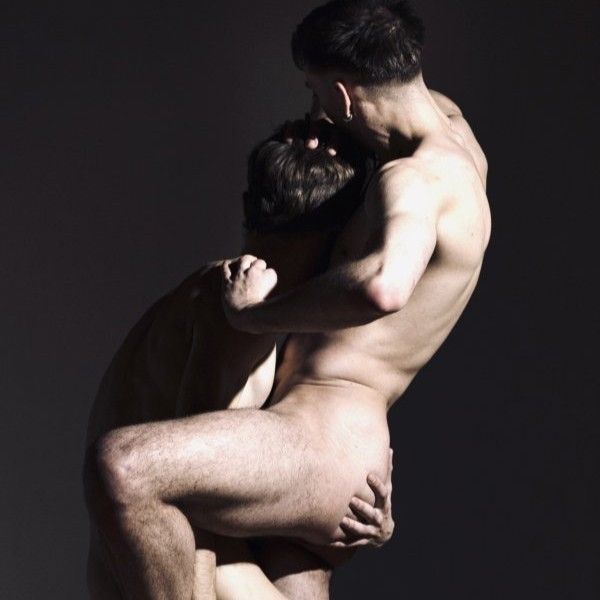
Queer Zagreb 2025
G.V.
From May 22 to 29, 2025, Zagreb will once again become the center of queer art as it hosts the 23rd Queer Zagreb Festival, this year dedicated to the theme "Criminal Queer." The festival explores the historical and contemporary criminalization of queer identities through law, culture, institutions, and social norms, while questioning how artistic tools can build resistance, document vulnerability, and embody survival.
"With this year’s theme, Criminal Queer, Queer Zagreb highlights the power of the queer community to survive in a context where the retraditionalization of societies worldwide poses a threat to queerness and diversity—not only in countries historically known as repressive but also in those that were once beacons of the fight for equality and human rights," explained the festival’s artistic director, Zvonimir Dobrović.
"The strength of artistic work, optimism, and resilience teaches us how to survive and create oases of sanity and safety in a world of right-wing populist politics that have already failed once—and will fail again."
This year’s program brings together international and local artists, including Maiamar Abrodos and Gonzalo Quintana (Argentina), Nikolina Komljenović (Croatia), Viktor Konstantinović (Serbia), Jeremy Goldstein (UK), Hazem Header (Egypt), Bruno Isaković (Croatia), National Queer Theater (USA), and Karlo Štefanek (Croatia/Netherlands). The thematic framework revolves around intimacy, repression, addiction, resistance, archiving, and memory.
The festival opens with the premiere of All My Bodies / Todos mis cuerpos by Argentine director Gonzalo Quintana, performed by renowned trans actress Maiamar Abrodos, one of the first people in Argentina to legally change their gender identity. The piece explores transition, the struggle for identity, life under dictatorship, and art as a means of survival, blending humor, music, and archival footage into a documentary introspection of an extraordinary life.
On May 23 and 24, the Coming Out Museum Encounters participatory exhibition will take place at the Ethnographic Museum’s Depository, inviting visitors to contribute their own objects and stories to a growing archive of queer narratives from Croatia and beyond.
That same evening (May 23), Viktor Konstantinović performs G at AKC Medika—a cartographic narrative about GHB experiences in gay party scenes, mapping the transformation of psyche, motor skills, and perception under the substance’s influence, from euphoric sexual liberation to loss of control, empathy, and orientation.
On May 24, Bruno Isaković presents the solo choreography Beyond the Edge at the Zagreb Dance Center, exposing the paradox of consciously surrendering to harmful behaviors for fleeting thrills and freedom, despite the inevitable toll on mind and body.
The Traces of Others project, developed in collaboration with the British Museum, will be presented on May 26 at the Zagreb City Museum. It features an interactive map of selected artifacts from partner institutions, including the Museum of Arts and Crafts, Zagreb Museum of Contemporary Art, National Museum of Modern Art, Ethnographic Museum Zagreb, and Museum of Apoxyomenos.
That same day, Karlo Štefanek performs 139 Letters to Noa Marlo at Multimedia Institute MaMa, a project stemming from his time in New York and reflecting on the end of his relationship with Noa Marlo. The work, conceived as an epistolary form rejecting linear narrative, includes readings, video works, and a conversation with art historian Leopold Rupnik.
For younger audiences, Nikolina Komljenović presents the participatory dance performance Which Planet Are You? on May 27 and 28 at the Zagreb Dance Center, blending new circus, ambient sound, and immersive scenography.
Egypt takes the stage on May 28 with Hazem Header’s solo Maneater at the Zagreb Dance Center, where he fuses belly dance, drag, cabaret, and lip-sync, transforming the space into a pulsating oasis of passion and bitter nostalgia.
That same evening, the National Queer Theater (USA) presents a staged reading of Waafrika 123: A Queerly Scripted Tragic Rise to African Fantasia, set in a Kenyan village on the eve of the country’s first democratic elections. The play explores forbidden love between Bobby, an American woman, and Awin, a Luo trans man, questioning the boundaries of love, identity, and power within patriarchy.
The festival closes with Jeremy Goldstein and Gonzalo Quintana’s interdisciplinary project This is Who I Am, a performative collage of queer monologues from Zagreb, accompanied by an exhibition by photographer Sanjin Kaštelan. The work weaves together autobiographical stories from the local queer community, reviving social histories that might otherwise remain unrecognized.
Full program details: https://thisisadominoproject.org/
Portrait of a Faith-Plumber
If science and technology have enabled the creation of a human being without sex through artificial insemination (‘immaculate conception’), one may expect that they will one day also enable the disappearance of the human being without death.
The Seductive Emptiness of Form
Wilde’s incisive reflections on false social morality perhaps have an even more piercing effect today, in a contemporary society where the boundaries between lies and truths have become still more fragile and porous, and where the obsession with bodily beauty and youth is far more tragic
Bolet and Marie – cryptoqueer Norwegian photography pioneers
The photography exhibition Bolette Berg and Marie Høeg, organised by the Center for Queer Studies, was held at the European House from 15 to 19 December 2025.