
Queer Studies 2026
CQS
Institute for Philosophy and Social Theory
45 Kraljice Natalije St., 4th Floor
MONDAY, May 25
from 5:30 pm to 8 pm
Manifesto of the Society for Cutting Up Men: Between Radical Critique and Political Imagination
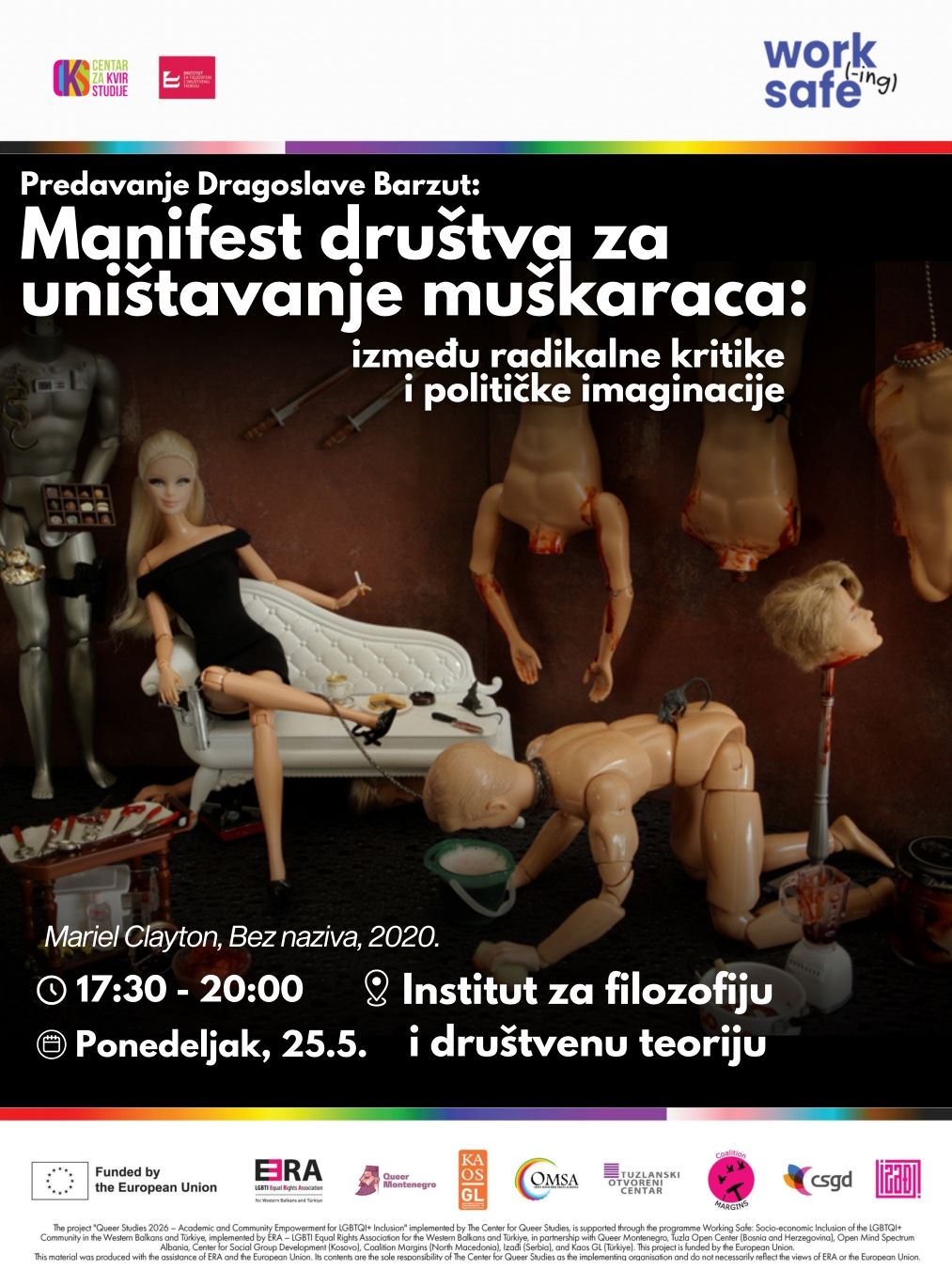
This lecture focuses on the pamphlet SCUM Manifesto by Valerie Solanas, one of the most provocative texts of radical feminism and a work that marked the beginning of the second wave of the women’s rights movement. The very acronym of the organization introduced by Solanas – SCUM (Society for Cutting Up Men) – is itself indicative and deliberately provocative, evoking meanings such as “trash” or “scum,” thereby destabilizing readers’ expectations in advance and establishing a tone of radical critique.
Through an analysis of the manifesto, the lecture explores its key ideas, rhetorical strategies, and the political context of its emergence, pointing out that the text functions as a radical critique of the patriarchal order, shaped through irony, hyperbole, and subversive language. Special attention is devoted to the way in which the manifesto opens space for thinking about lesbianism as a political and existential position, as well as the relationship between feminist and queer perspectives. The lecture will also problematize different interpretations of this text, ranging from literal and dismissive readings to theoretically productive ones, and raise the question of its contemporary relevance. The aim is for this reading to open a broader framework for understanding the relationship between feminism and queer theory, as well as the role of radical texts in shaping political imagination.
Dragoslava Barzut was born in 1984 in Crvenka (Vojvodina). She graduated in Comparative Literature in Novi Sad. She is the author of the short story collection Golden Bullet (2012), for which she received the “Đura Đukanov” Award (2011). For the story “The Last Hour Is the Longest Plus Bonus Track,” she received first prize at the regional short story competition “Outside the Corridor” (2011). For the novel Paper Disco Balls (2017), she received the “Anđelka Milić” Award for 2018. She was appointed to the Council of the Ministry for Human and Minority Rights and Social Dialogue as a representative of the association “Civic Initiatives.” She has been active in this association since 2021, first as Networking Coordinator, then as Manager of the Public Policy Program, and currently as Manager of the Local Community Development Program. She is a member of several working groups for the drafting of strategic documents in the field of human rights protection. For nearly 15 years, she has been active in the fields of anti-discrimination protection, gender equality, and advocacy for a more just society in Serbia. In 2017, the U.S. Embassy in Serbia awarded her a prize for her contribution to reducing gender-based violence, as well as violence and discrimination motivated by prejudice against persons of non-heteronormative sexual orientation, expression, and gender identity.
Moderated by:
Dušica Popović,
Center for Queer Studies
Institute for Philosophy and Social Theory
Kraljice Natalije 45, 4th floor
FRIDAY, May 15
from 5:30 PM to 8 PM
Lesbian Feminist Movement: From Socialist Yugoslavia, Through Nationalism and War, to the Present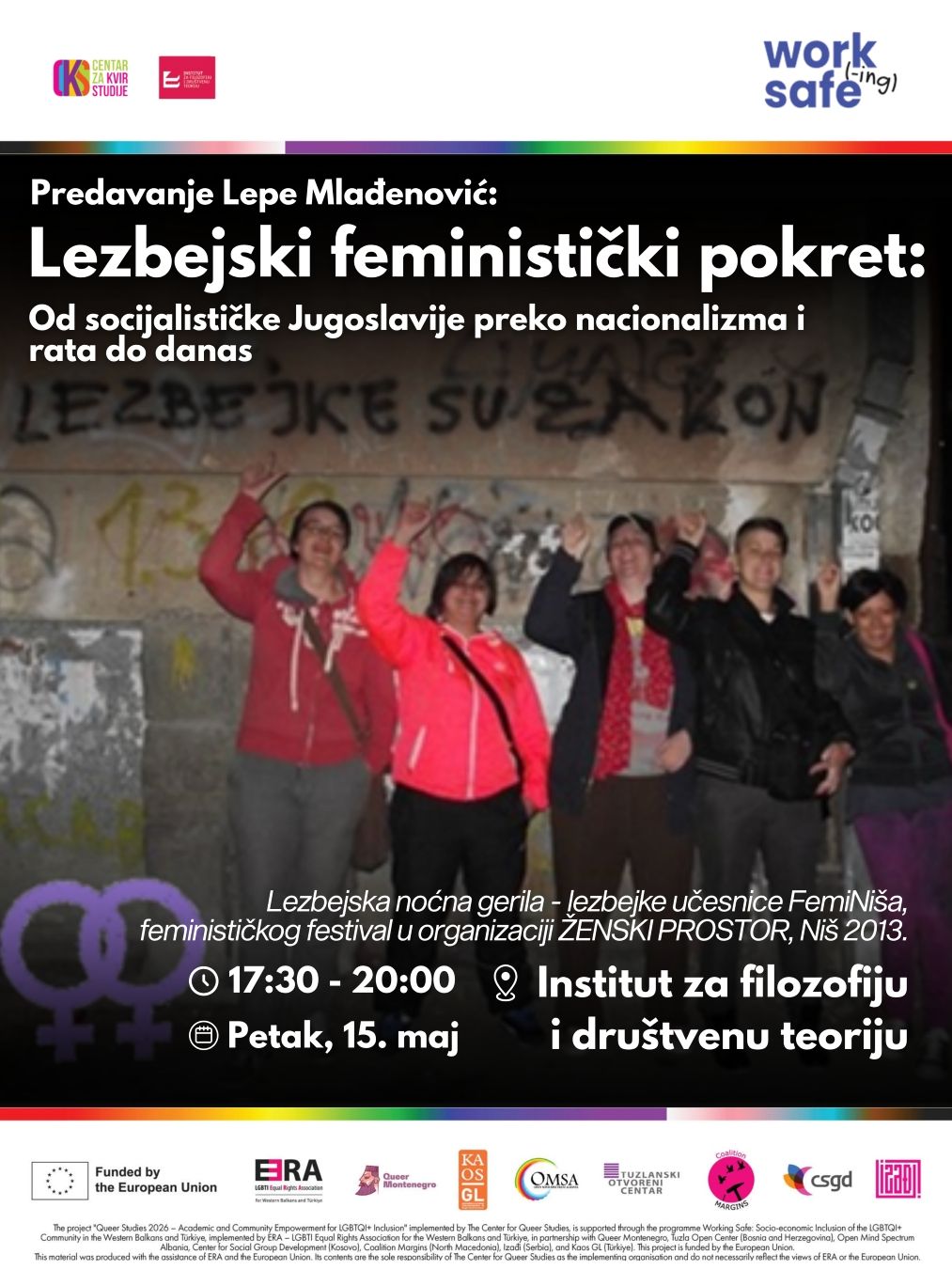
The lecture will discuss lesbian groups in Yugoslavia from 1987, when Lesbians LILIT (LL) emerged within the feminist group LILIT, up to the present day.
It will address the core feminist values on which these groups were founded, their anti-war and anti-nationalist positions during the 1990s, as well as their insistence on solidarity and cooperation between groups through Lesbian Weeks and regional lesbian gatherings.
lepa mlađenović is a feminist lesbian and an activist in the lesbian and feminist movement. She is a feminist consultant working with women who have survived the trauma of male violence and lesbophobia. She is also an anti-war activist with Women in Black against war.
She co-founded Arkadija – Lesbian and Gay Lobby in 1991, Autonomous Women’s Center in 1993,_ Labris — a feminist organization for lesbian human rights_ — in 1995, and_ Lesbian Consultations_ in 2012. She is also an activist in the European Network Against Violence, the Network Alternatives to Psychiatry, and the Feminist Network for Response to Sexual Violence in War in the Territory of Yugoslavia.
Moderated by:
Dušica Popović,
Center for Queer Studies
Institute for Philosophy and Social Theory
Kraljice Natalije 45, 4th floor
FRIDAY, May 8
5:30 PM – 8:00 PM
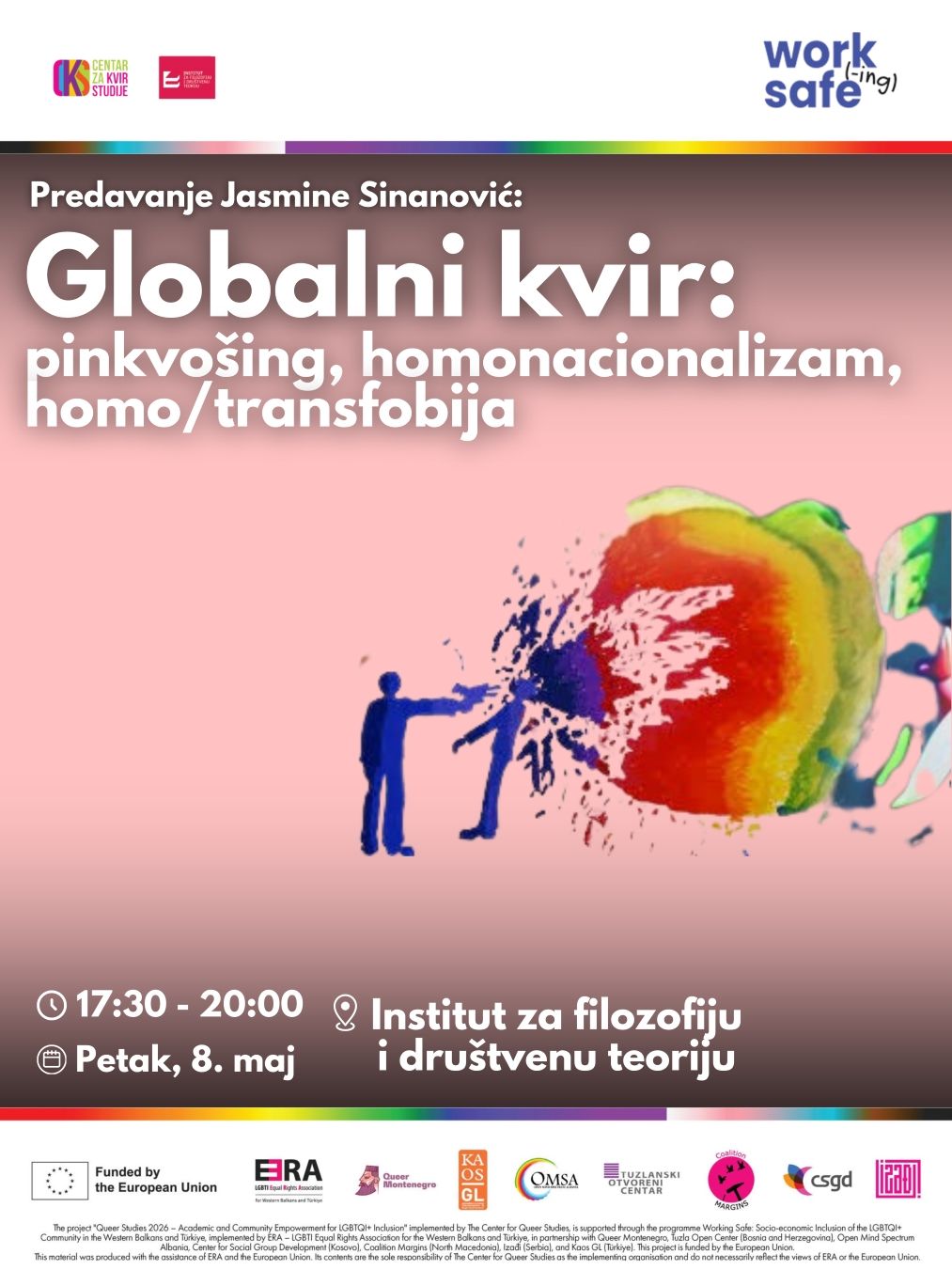
Global Queer: Pinkwashing, Homonationalism, Homo/Transphobia
This lecture explores the dynamics of contemporary LGBTQ+ politics in the context of globalization and the neoliberal order. The global queer is not merely a process of universal emancipation, but also a field of political and ideological instrumentalization.
Pinkwashing represents a strategy through which states, corporations, or political actors use apparent support for LGBTQ+ rights in order to divert attention from human rights violations, controversial military interventions, or repressive policies. On the other hand, homonationalism — a term introduced by Jasbir Puar — describes the process through which the rights of sexual minorities become integrated into nationalist agendas. Through homonationalist discourse, tolerance toward queer people becomes a marker of the “civilizational superiority” of the West, often used to stigmatize non-Western cultures (especially in the context of Islamophobia) and justify restrictive migration policies.
After decades of integrating LGBTQ+ people into mainstream liberal discourse, we will focus on the transformations of contemporary homo/transphobia in the context of the rise of right-wing organizing. Rather than disappearing within “progressive” societies, these forms of oppression are recontextualized; they persist within queer communities themselves through processes of marginalizing those who do not fit the normative, white, middle-class model of the “acceptable” gay identity.
Our aim is to point to the dangers that arise when the struggle for queer liberation becomes detached from broader anti-colonial and anti-capitalist movements, turning into a tool in the service of state sovereignty and global domination.
Jasmina Sinanović teaches during the day in the Department of Anthropology and Interdisciplinary Programs / Gender Studies subsection at City College, while spending their nights on stage. Their fields of research interest include queer theory, performance theory, and postcolonial theory, as well as the study of Balkanism. They earned an M.F.A. in Dramaturgy from Stony Brook University and an M.A. in Theatre Studies from the Graduate Center (CUNY) at Brooklyn College.
Moderation:
Dušica Popović,
Center for Queer Studies
Institute for Philosophy and Social Theory
Kraljice Natalije 45, 4th floor
THURSDAY, April 30
5:30 PM – 8:00 PM
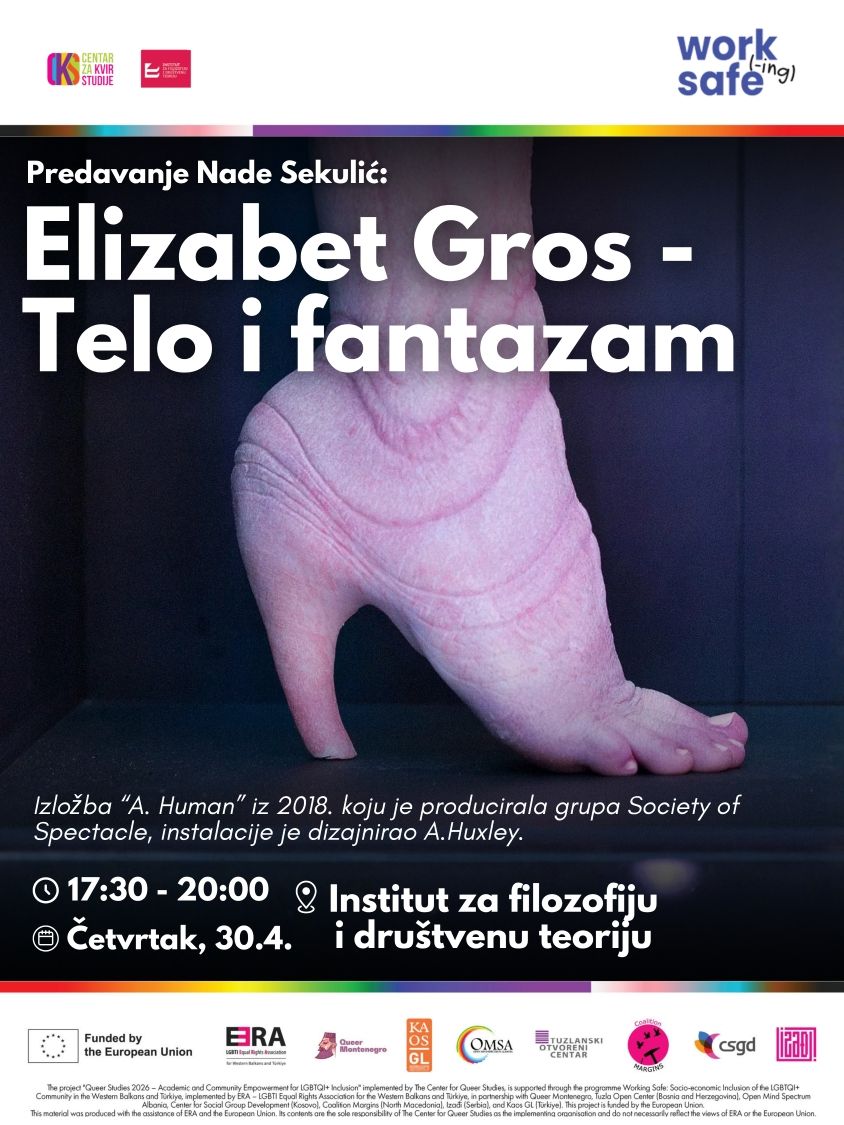
Elisabeth Grosz – Body and Phantasm
The lecture is dedicated to analyzing and problematizing the role of imagination and fantasy in the ontological and psychological shaping of our reality, especially our corporeality and the productive role of desire. Body and desire are always mediated by imagination, and as such do not primarily coincide with the regimes that seek to normalize them. Starting from the work of Elisabeth Grosz, as well as the broader philosophical problem of the productivity of imagination, the aim of this presentation is to point to the flexible and elastic frameworks of living, imagining, and regulating the body and its positioning between the “inner” and “outer” world.
Nada Maćig Sekulić is a full professor at the Faculty of Philosophy, where she teaches Gender Studies, Anthropology of War, and Sociocultural Anthropology. She is the author of three monographs (“On the End of Anthropology,” “The Culture of Childbirth,” “Hidden War”) and dozens of works in the fields of anthropological theory and history, Eastern cultures, and feminist theory and research.
Moderation:
Dušan Maljković,
Center for Queer Studies
Institute for Philosophy and Social Theory
Kraljice Natalije 45, 4th floor
FRIDAY, April 24
5:30 PM – 8:00 PM
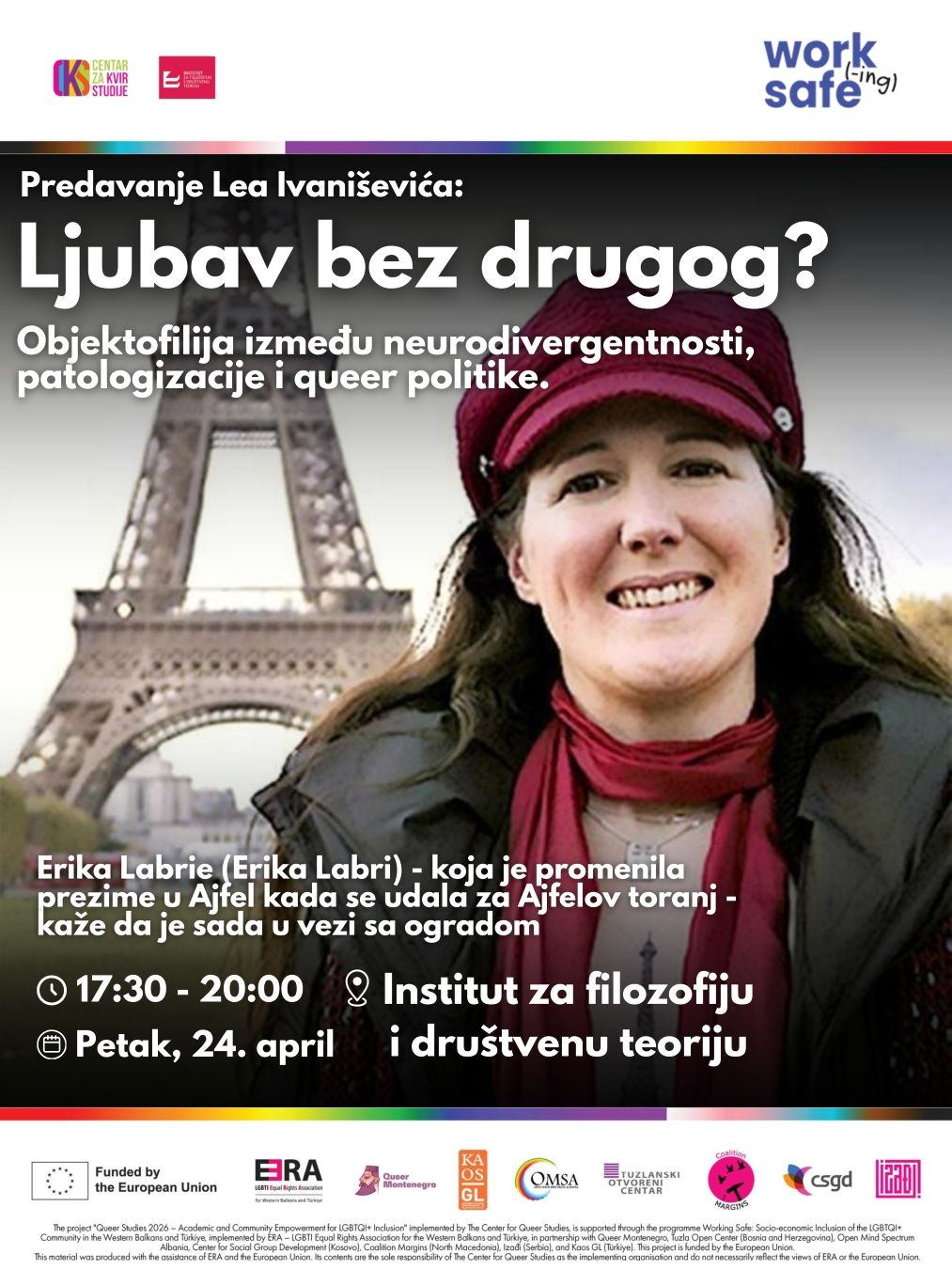
Love Without the Other? Objectophilia Between Neurodivergence, Pathologization, and Queer Politics
Objectophilia — emotional and/or sexual attachment to inanimate objects — represents a challenge to contemporary theories of sexuality, identity, and relationships. Although public discourse often views it either as a deviation or as an “exotic” variation of sexual orientation, this phenomenon raises deeper questions about reciprocity, otherness, and the limits of love.
In this presentation, objectophilia is analyzed from an integrative psychodynamic perspective, drawing on psychodynamic theoretical frameworks. Particular attention is devoted to distinguishing between autistic, schizoid, and narcissistic personality organizations, as well as to the role of autism, synesthesia, and trauma in the formation of this mode of attachment. Objects are understood as specific self-objects that enable stabilization of the self, yet without the capacity for reciprocal response.
The central thesis of the presentation is that objectophilia produces a subjective experience of reciprocity without real otherness: the subject may experience love as reciprocated, but without encountering an autonomous other who introduces uncertainty, frustration, and development. In this sense, the phenomenon is reduced neither to pathology nor to mere neurodivergence, but is understood as a specific relational organization with particular developmental potentials and limitations.
The concluding section examines the place of objectophilia within queer theory and LGBT+ movements. Although it shares experiences of marginalization and challenges heteronormative assumptions about love, objectophilia is not based on an interpersonal relationship between subjects, making it ambivalent in relation to existing queer frameworks. It is proposed that it be positioned at the boundary of the queer spectrum, as a phenomenon that not only expands the understanding of sexuality, but also radically problematizes the very idea of reciprocity.
The presentation aims to offer a theoretically differentiated, clinically sensitive, and ethically non-moralizing framework for understanding this phenomenon, opening space for dialogue between psychodynamic theory and contemporary queer studies.
Leo Ivanišević is a graduate psychologist, M.A. manager, specialist in psychoanalytic psychotherapy, educator, and supervisor at the OLI Center for Integrative Psychodynamic Psychotherapy. He has extensive experience working on NGO sector projects, as well as with youth and vulnerable groups. As an educator and expert, he has participated in projects encouraging entrepreneurship (Tech1, Founder Institute), work with vulnerable groups (Re Generacija, Roma Sijam), and communication and assertiveness training (assertive communication training for the Ministry of Justice, conducted within the Business School for PR).
He is actively engaged in promoting psychology and psychotherapy in the media through articles, guest appearances, and his blog “Psihomehaničar.”
Moderation:
Dušica Popović,
Center for Queer Studies
Institute for Philosophy and Social Theory
Kraljice Natalije 45, 4th floor
FRIDAY, April 17
5:30 PM – 8:00 PM
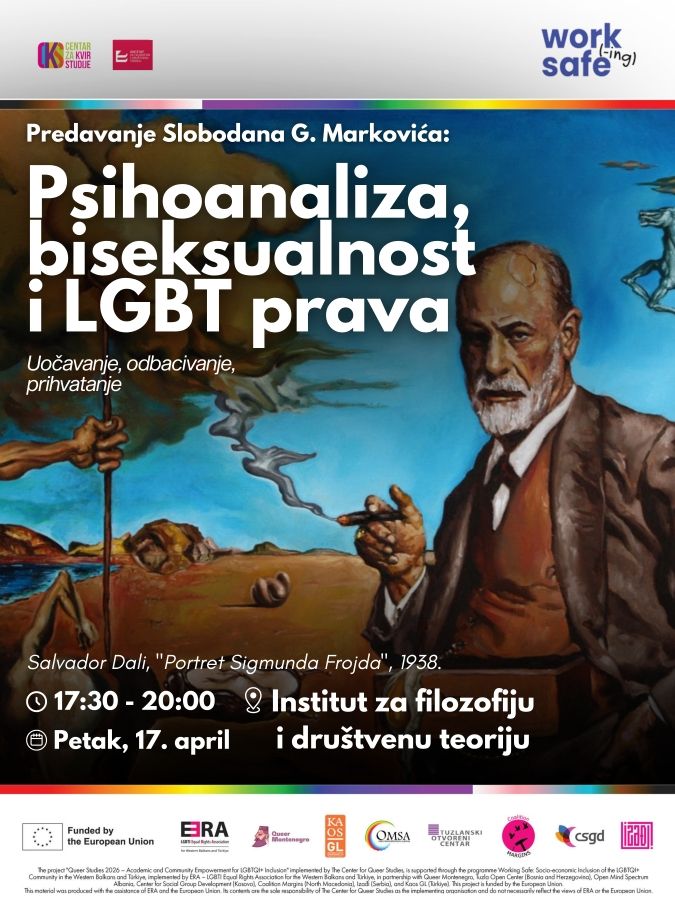
Psychoanalysis, Bisexuality, and LGBT+ Rights: Recognition, Rejection, Acceptance
At the beginning of the twentieth century, one of the more repressive models of sexuality prevailed in Europe: the Victorian view of sexuality, based on the model of hegemonic masculinity. It built upon the Judeo-Christian (Augustinian) standpoint, renewed in the twelfth century and dominant until the Enlightenment, when it was redefined alongside the rise of the nation-state. During the period of hegemonic masculinity, from the mid-nineteenth to the mid-twentieth century, heteronormativity became a firmly established canon, and legal bans on homosexuality bypassed only France during the nineteenth century (until World War I, homosexuality was decriminalized only in the Ottoman Empire (1858) and Italy (1889/90)).
Psychoanalysis emerged at the end of the nineteenth century, precisely when hegemonic masculinity was at its peak. Its founder, Sigmund Freud, believed that the child was sexually polymorphous and that psychological bisexuality was the starting point of sexuality — that every individual is constitutively bisexual. Freud repeatedly elaborated the theory of psychological bisexuality, and in 1937 returned to the idea that each biological sex represses the opposite sex within itself: women repress the desire for the penis, while men repress rebellion against their own femininity and homosexuality.
Based on this theory, one might have expected psychoanalysts to accept homosexuality and bisexuality, but this did not occur. Only Freud and Sándor Ferenczi did not regard homosexuality as an illness, while Freud believed that same-sex-oriented individuals could also practice psychoanalysis.
The main currents of psychoanalysis developed after World War II in the United States, in an atmosphere of hysteria against leftist ideas. Psychoanalysis managed to become part of the American mainstream, but the price was its medicalization and masculinization. A “castrated psychoanalysis” was created, adapting itself to the homophobic spirit of the time. Numerous psychoanalysts participated in conversion therapies and thereby accepted the belief that same-sex sexual orientation could be cured (Freud himself never believed that sexual orientation could be changed through any therapy).
Although Freud (in numerous works from 1905 to 1939) and Alfred Kinsey explained both the “normality” and prevalence of bisexuality among humans, bisexuality encountered even greater obstacles on the path toward acceptance in mainstream Euro-Atlantic societies.
Such views were abandoned in the 1970s. From the early 1980s onward, a new tendency emerged within psychoanalysis. It developed cultural sensitivity and accepted that its methods must adapt to specific cultural and social conditions around the world. The radical change in attitude became obvious when the American Psychoanalytic Association (APA) became the first mental health organization in the United States to support same-sex marriage.
By returning to its original foundations, psychoanalysis contributed to the creation of the climate of tolerance toward sexual minorities that prevailed in Western Europe and the United States at the beginning of the twenty-first century. Today, that tolerance is once again the target of fierce attacks from conservative social circles.
Slobodan G. Marković is a full professor at the Faculty of Political Sciences of the University of Belgrade and at the Institute for European Studies. He heads the Centre for British Studies at the Faculty of Political Sciences and collaborates with the think tank LSE IDEAS at the London School of Economics. From 2022 to 2025, he led the scientific project “Cultural Transfer Europe-Serbia from the 19th to the 21st Century” (CTES).
In addition to editing twelve collections, he has published the books “British Perceptions of Serbia and the Balkans 1903–1906” (Paris, 2000), “Count Čedomilj Mijatović: A Victorian Among the Serbs” (Belgrade, 2006), and “The Pessimistic Anthropology of Sigmund Freud” (Belgrade, 2014). He organizes the periodic conference Psychoanalysis and Culture.
His research focuses on Balkan relations with the United States and Britain, psychoanalytic anthropology, the history of European pessimism, and intellectual history. In 2023, he held the Krzysztof Michalski Fellowship at the Institute for Human Sciences (IWM) in Vienna. Since 2024, he has been a member of Academia Europaea.
Moderation:
Dušan Maljković,
Center for Queer Studies
Institute for Philosophy and Social Theory
Kraljice Natalije 45, 4th floor
THURSDAY, April 9
5:30 PM – 8:00 PM
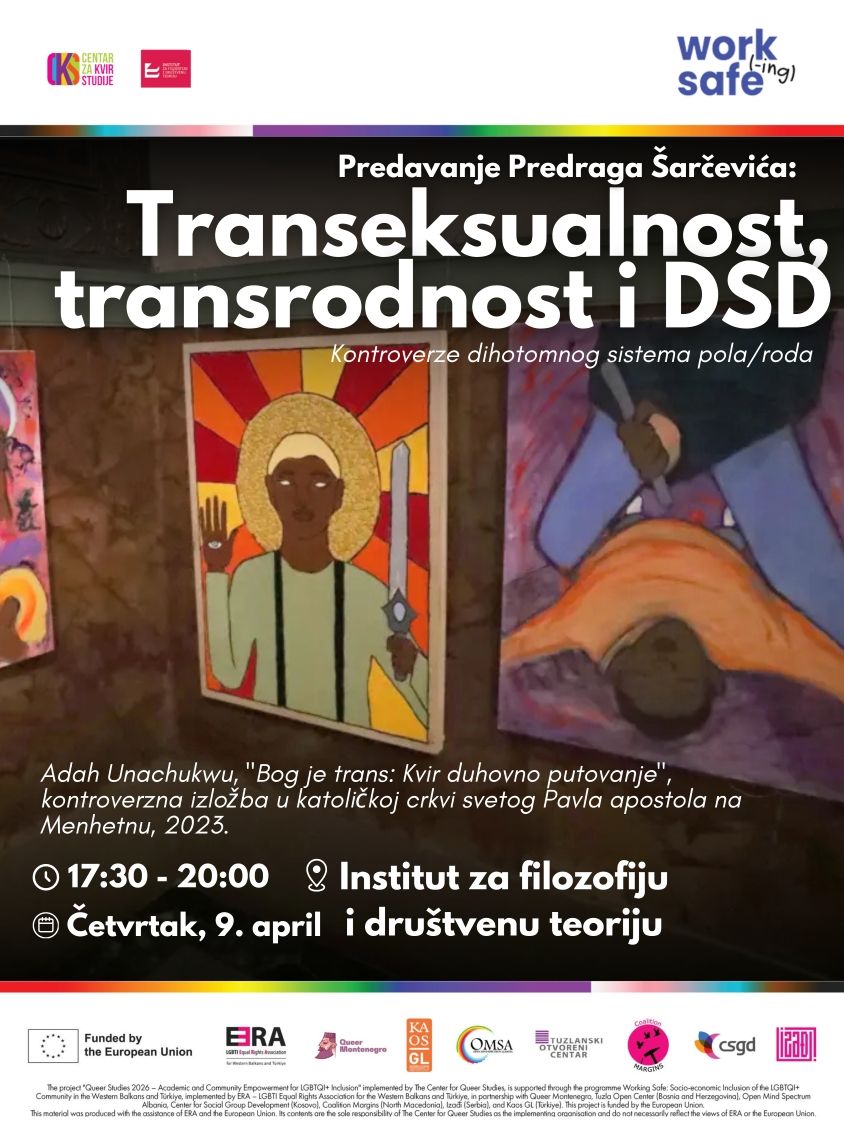
Transsexuality, Transgender Identity, and DSD: Controversies of the Dichotomous Sex/Gender System
A few years ago, the Vatican published, in seven languages, a text entitled “Male and Female He Created Them,” with the explicit intention of pointing to a “crisis in education, especially in the field of affectivity and sexuality,” allegedly caused, according to the authors, by the decades-long influence of “gender theory,” or “gender ideology.”
In fact, this was an attempt by the Roman Catholic Church to respond to the much broader, epochal crisis of traditional sexual and gender categories, norms, and roles, as well as an effort to restore and strengthen the foundations of the shaken binary construction of sex and gender, not only as a “natural,” but also as a “God-given” structure.
Within such an order, states of transsexuality, transgender identity, and intersexuality represent highly challenging ambiguous forms that resist clear classification and essentialist reduction to one of two legitimate categories. Starting from these examples, the lecture will problematize the convergences and divergences of various approaches to understanding and interpreting human sexuality from the beginning of the second half of the twentieth century to the present day.
The presentation will also examine the changing relations established throughout this history of sexuality between different systems of power — medical, legal, and religious — as well as between the subjects and communities gathered under the LGBT+ acronym themselves.
Predrag Šarčević graduated, earned his M.A., and completed his PhD at the Department of Ethnology and Anthropology at the Faculty of Philosophy in Belgrade. His research focuses on gender studies and the history of sexuality. He works at the public broadcasting service RTS as an editor on the Third Programme of Radio Belgrade. He has long collaborated with the Center for Queer Studies, as well as with the NGOs Geten and XY-Spectrum.
Moderation:
Dušan Maljković,
Center for Queer Studies
Institute for Philosophy and Social Theory
Kraljice Natalije 45, 4th floor
FRIDAY, April 3
5:30 PM – 8:00 PM
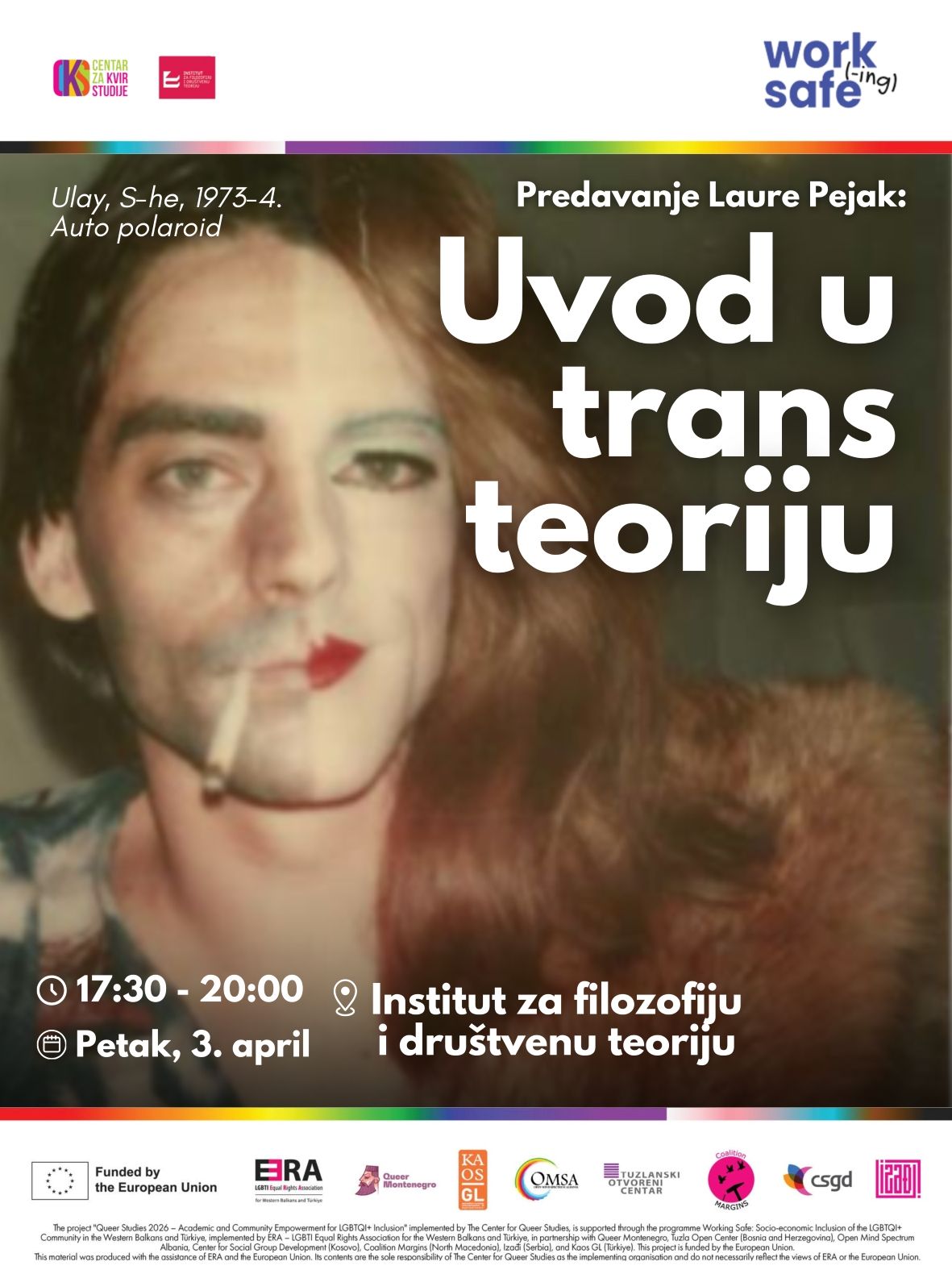
Introduction to Trans Theory
Gender has been a central issue addressed by feminist and queer movements since their very beginnings. This concept permeates almost every aspect of our everyday lives. Transgender people are in a particularly strong position to offer analyses of gender, given that their lived experience enables them to reflect diachronically on questions of gender and gendered existence, as well as on labor, economic and social marginalization, and transphobia.
This lecture will discuss the social theories developed by trans people thus far, the ways in which transgender identity has shaped or deconstructed existing discourses on gender, feminism, and the society in which we live, as well as the social and economic existence of transgender people — from the perspectives of trans Marxism, third-wave feminism, queer theory, and queer anarchism, with reference to contemporary research on transgender social positioning.
Laura Pejak is a self-educated author, translator, social theorist, and activist. Born in 1998 in Novi Sad, where she has spent most of her life, her primary fields of interest include queer theory, radical theology, antimilitarism, antinationalism, ecofeminism, social ecology, and related topics.
Since 2021, she has worked as a librarian and coordinator at Infoteka CK13, where she translates and archives documents, books, and texts relevant to the socio-political reality in which we live.
From 2020 to 2023, she worked as a youth worker and later as a community coordinator in the LGBT+ youth organization “Grupa IZAĐI.” She has been involved with the Talas-TIRV association since the earliest stages of its formation and frequently collaborates with Talas as an external associate.
In 2023, together with several other activists, she co-founded the Center for Social Progress, an organization focused on developing and imagining progressive policies. Among the most important outcomes of her work there are the publications “Sexual Education in Serbia – Analysis of Possibilities and Recommendations” and “Economic and Social Rights of LGBT+ Persons,” both co-authored with other members of the organization.
Moderation:
Dušica Popović,
Center for Queer Studies
Institute for Philosophy and Social Theory
Kraljice Natalije 45, 4th floor
MONDAY, March 30
5:30 PM – 8:00 PM

From Gender Trouble to Gender Panic: The Queer Theory of Judith Butler
Judith Butler published her doctoral dissertation in 1987 under the title Subjects of Desire. The dissertation dealt with an important section of Hegel’s Phenomenology of Spirit and the reception of that work in postwar France. Although the book was a quintessential example of queer philosophy and an attempt to grasp the life of desire, nothing at the time suggested that Butler would become an icon of queer theory or radically alter the direction of feminism.
In her own words, when writing Gender Trouble, she believed that perhaps a hundred people would read it — maybe enthusiasts of poststructuralism, which was rapidly advancing through American academia. All those figures glimpsed behind the text in Subjects of Desire — Simone de Beauvoir, Monique Wittig, Michel Foucault, and others — now become the main actors displacing gender, sex, and desire from their previous frameworks, unbinding them thoroughly and, it seemed, once and for all.
Bodies performing gender in order to live become the central actors of feminist thought, all occurring precisely at the moment when Eve Kosofsky Sedgwick publishes Epistemology of the Closet and Teresa de Lauretis organizes the conference on queer theory, introducing the term itself.
Gender Trouble became the cornerstone of a mode of thought that sought to exist beyond identity, to revoke fixed subjects, and to release desire from the cage of norms. The lecture will focus on the first phase of Judith Butler’s intellectual work, which is difficult to categorize as anything other than queer philosophy, even when gender itself ceased to be its primary focus.
Adriana Zaharijević is a philosopher and senior research fellow at the Institute for Philosophy and Social Theory of the University of Belgrade. Her work combines political philosophy, feminist theory, and social history. She is the author of four books (“Becoming a Woman,” “Who Is an Individual?,” “The Life of Bodies: The Political Philosophy of Judith Butler" and "Judith Butler and Politics", translated into Slovenian and currently being translated into Polish).
She translated Gender Trouble (Karpos, 2010) and Precarious Life (Mediteran, 2020), as well as numerous other texts by Judith Butler.
Moderation:
Dušica Popović,
Center for Queer Studies
Institute for Philosophy and Social Theory
Kraljice Natalije 45, 4th floor
FRIDAY, March 20
5:30 PM – 8:00 PM

The Genealogy of Sexuality in Michel Foucault
The lecture is dedicated to the genealogy of sexuality in the philosophy of Michel Foucault. The first part of the lecture focuses on genealogy as a method of inquiry, while the second part examines how this method, as a historical approach, was applied to the question of sexuality.
Special attention will be devoted to the influence that Foucauldian genealogy of sexuality has had on feminist, LGBT, and queer studies, as well as to critical perspectives and the limits of genealogical analysis.
Katarina Lončarević is an associate professor at the Faculty of Political Sciences of the University of Belgrade. Her writing primarily focuses on feminist philosophy and epistemology, the history of feminism and feminist movements, and political theory. She is the editor-in-chief of the journal for feminist theory and cultural studies Genero.
She has published a large number of scholarly works in feminist philosophy and feminist theory: she is co-author of three monographs, author of the scholarly monograph Revolt of Subjugated Knowledges: An Introduction to Feminist Epistemologies (2022), and co-editor of four edited volumes, the latest of which is Homonationalism, Femonationalism and Ablenationalism (Routledge, 2022).
Moderation:
Dušan Maljković,
Center for Queer Studies
Institute for Philosophy and Social Theory
Kraljice Natalije 45, 4th floor
FRIDAY, March 13
5:30 PM – 8:00 PM

Plato on Homoerotic Love
Examples of homoerotic affection are significantly present in Plato’s dialogues, especially those from his early and middle periods. In dialogues such as Charmides, Lysis, and Symposium, erotic attraction between men is presented as a socially recognizable and culturally articulated form of relationship within the Athenian aristocratic milieu.
In Charmides, Socrates openly describes his excitement before the beauty of Charmides’ body, while Lysis testifies to the practice in which older men entered close relationships with younger males as they came of age. In Symposium, particularly in the speeches of Pausanias and Aristophanes, the thesis is advanced that male-male love possesses a special value, associated with the superiority of male nature and the idea of spiritual communion.
However, for Plato this relationship is not reduced exclusively to the bodily dimension. It is closely tied to the paideic function of eros — the educational and moral role the older partner has in shaping the younger partner’s character.
In contrast to this portrayal in the earlier dialogues, in the later work Laws, Plato explicitly condemns homosexual relations, relying on arguments concerning naturalness, social order, and the legislator’s concern for civic virtue.
The aim of this lecture is to examine how this apparent tension between different Platonic texts can be understood. It will be shown that homoerotic motifs in the earlier dialogues primarily possess pedagogical and philosophical significance within Plato’s understanding of eros, whereas in Laws the normative perspective of the legislator emerges. This distinction points to the development of Plato’s thought and to the different generic and philosophical functions the concept of eros assumes within his oeuvre.
Irina Deretić is a full professor of Ancient Philosophy at the University of Belgrade, where she teaches at undergraduate, master’s, and doctoral levels. She serves as head of the Institute of Philosophy and led the project History of Serbian Philosophy for nine years.
Her scholarly work focuses on ancient Greek philosophy, German hermeneutics, Serbian philosophy, virtue ethics, and literary theory. She is the author of six monographs, including How to Name Being?, Logos, Plato, Aristotle, From Plato’s Philosophy, Plato’s Philosophical Mythology, and Words and Literature.
She has published more than 140 scholarly articles in Serbian, English, German, Spanish, and Slovenian, and her research has appeared with international publishers such as De Gruyter and Springer. Among her most recent contributions is the chapter “Socrates on Emotions” in The Bloomsbury Handbook of Socrates (London: Bloomsbury Publishing, 2024), representing one of the latest overviews of contemporary research on Socratic philosophy.
In addition to her own scholarly work, she has edited six academic volumes, including the international edition From Humanism to Meta-, Post- and Transhumanism? published by Peter Lang Verlag (Frankfurt am Main, 2016). She has been a visiting professor in Jena, Uppsala and is a member of the Executive Board of the Serbian Philosophical Society.
Moderation:
Dušica Popović and Dušan Maljković,
Center for Queer Studies
Institute for Philosophy and Social Theory
Kraljice Natalije 45, 4th floor
FRIDAY, March 6
5:30 PM – 8:00 PM
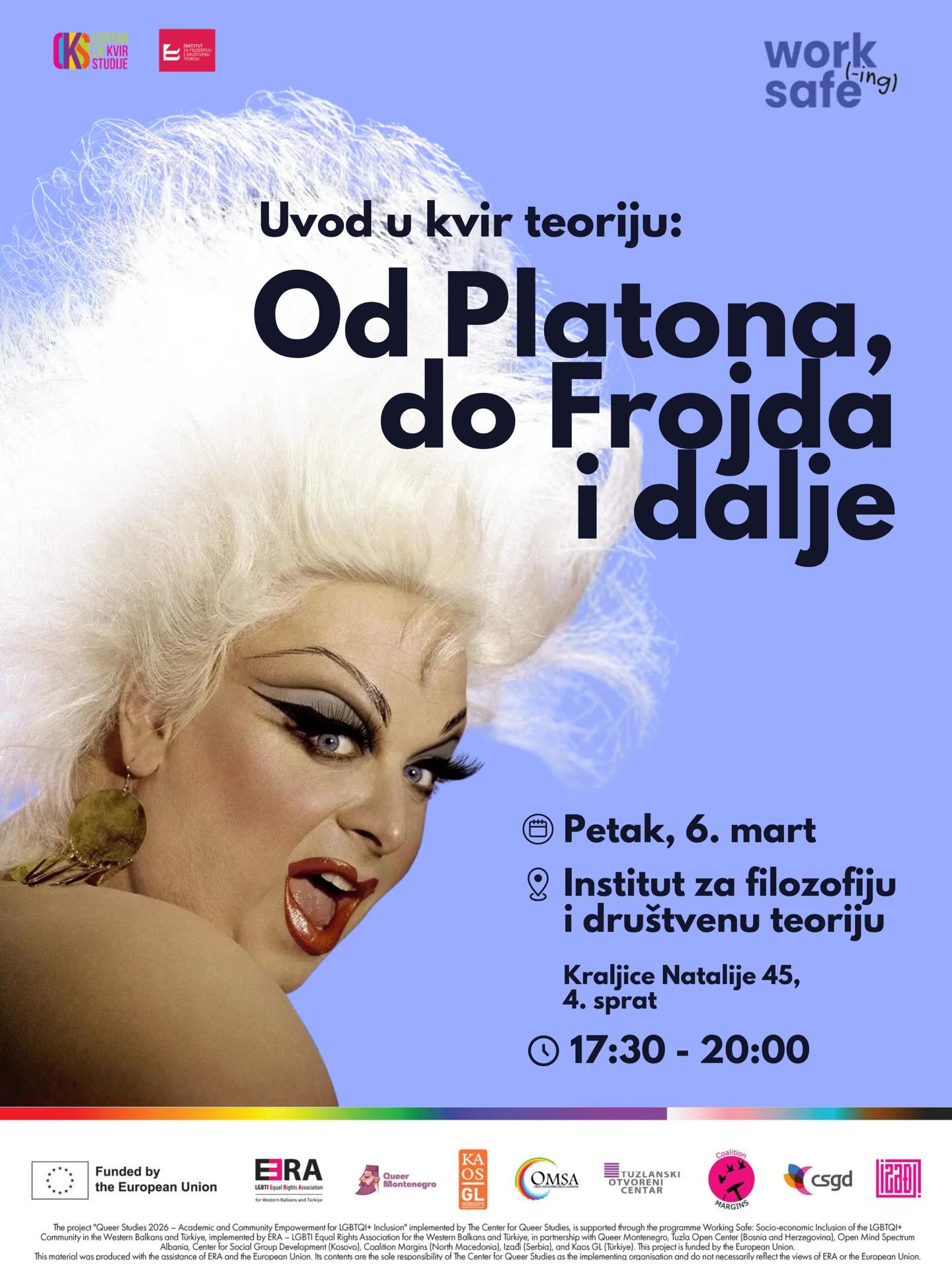
Introduction to Queer Theory: From Plato to Freud and Beyond
The English word queer derives from the German word_ quer_, meaning “askew,” “slanted,” or “crosswise,” hence the English meanings: “strange,” “outside the norm,” “perverse.” Queer theory does not merely study identities or belonging to the LGBT+ community; rather, it represents a critique of the normative frameworks that determine what counts as a “natural” gender, desirable sexuality, or legitimate way of life.
Although in its contemporary form it is associated with the 1990s and the work of Judith Butler, especially Gender Trouble, queer thinking has a deeper and more branching prehistory. If we understand the queer as a deviation from heteronormative — and even homonormative — models, then we can trace its interrupted genealogical thread throughout the history of Western thought.
Plato’s Symposium offers one of the earliest philosophical accounts of male homoerotic love as a source of wisdom and spiritual ascent. At the same time, the deepest truth about love in that dialogue is articulated by Diotima, a female prophet, already representing a double deviation from later norms of exclusively male philosophical rationality and heterosexuality as the “natural” model.
Sigmund Freud, in the twentieth century, undermined the idea that sexuality is natural, stable, and predetermined. For him, Eros is not merely a biological function, but a process of intertwining repression, prohibition, and fantasy, constructed primarily in childhood and grounded in the unconscious. In this way, he introduces permanent uncertainty into the heterosexual order and stable sexual orientations — what we call sexual desire is the result of unique contingent intra-familial and, secondarily, cultural-historical dynamics.
Michel Foucault demonstrates that sexuality is not the “inner truth” of the person, but a historically constructed regime of knowledge and power. The truth of one’s “sexual nature” is produced through medicine, law, the church, education, and psychiatry. Foucault thereby opens a space for understanding sexual norms as political — as something society actively creates, rather than merely reflects.
Building on these insights, Judith Butler argues that gender is not a tangible essence, but a performance — a series of repeated practices, gestures, and signs that society teaches, rewards, or sanctions. If gender is performed, then it can also be reshaped, both throughout life and transgenerationally. Butler shows that the boundaries of gender are not stable, but can be disrupted through parody, play, irony, and similar practices.
Queer theory, therefore, asks not only who we are, but why a particular form of life has been declared “normal.” It opens space for different modes of existence, feeling, speech, and community — for lives that do not fit into predetermined patterns.
Dušan Maljković is a PhD candidate in the philosophy of psychoanalysis and queer theory, an independent cultural worker, and a member of the Serbian Literary Translators Association. He has published dozens of scholarly and literary works and delivered numerous lectures in Serbia and abroad.
Moderation:
Dušica Popović,
Center for Queer Studies
Protocol of Selective Visibility
Marking twenty-five years since the first attempt to organise a Pride Parade in Belgrade (2001–2026).
Dead Inside, But Still Horny!
An Open Discussion on Dating in the Age of Grindr, Hookup Culture, and Mental Health
Queer Studies 2026. First semester.
In the 2026 academic year, Queer Studies will once again be a two-semester course consisting of 24 lectures, held at the Institute for Philosophy and Social Theory.