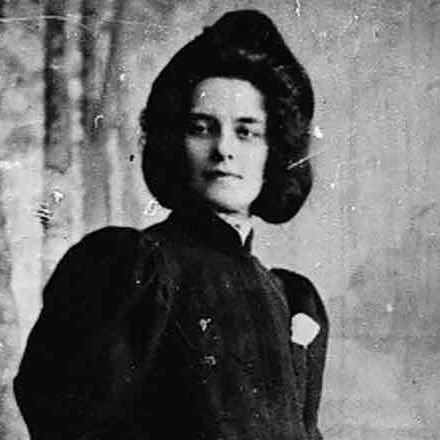
Queer Heroine of Culture: Zinaida Nikolayevna
Jaroslav Pecnik
From an early age, Zinaida Nikolayevna Gippius, with her unconventional behavior, controversial views, and provocative statements, stirred up those around her: parents, her three sisters (Tatyana, Natalia, and Anna), relatives, friends, acquaintances, and the general public. Like a volcano of immense, nearly uncontrollable creative energy—often argumentative and filled with biting allusions—she left no one indifferent. The gossip, attacks, and criticism of both her poetry and prose, as well as her lifestyle, did not bother her in the least. In fact, it seems that she thoroughly enjoyed it all. The more the conservative, bourgeois environment reacted with outrage and sharp criticism, the more her actions radicalized, becoming even more shocking and scandalous.
Zinaida, a fierce and independent "wild Amazon," was known for her curious mind, sharp intellect, wide-ranging education, refined taste, and strong inclination toward aesthetics in the broadest sense of the word. Many compared her to the famous George Sand (1804–1876). At the same time, she was fully aware of her femininity, subtle erotic allure, and unique beauty, which, naturally, provoked envy among women while men were openly captivated by her harmonious appearance. However, she soon began to repel many with her eccentricity. In every sense, she was dominant and superior, showing no concern for mediocrity, which she openly mocked, as well as all "gender" stereotypes.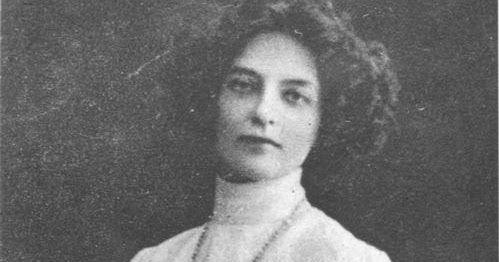
The Madonna of Decadence
Many admired her "Botticelli-like beauty" and literary talent but feared her "superior sarcasm and cynicism." Peter Percov, one of the founders of Russian symbolism, in which Zinaida played a major role, vividly described her appearance: "A tall, statuesque blonde with long golden hair and emerald-green eyes, wearing a blue dress that fit her perfectly, immediately caught everyone's eye with her perfect presence." It seems that she always wanted to show herself as different from the society in which she lived, expressing her protest and disdain for societal elites through her "decadence." She earned the nickname "Madonna of Decadence" for her rejection of the hypocritical values of honesty, humanity, moderation, and rigid morality that those elites preached but seldom practiced. At the same time, she was not shy about her great literary ambitions, believing that, thanks to her undeniable talent, she had every right to pursue fame and recognition.
People close to her often described Zinaida as highly ambitious, unafraid of engaging in well-thought-out provocations to draw attention to herself and what she considered important. Her free-spirited style of dressing, long before Coco Chanel (1883–1971), had already been setting new fashion trends since 1905. She cut her hair short, much to the horror of Russian society. Her heretical ideas went hand in hand with her modernist poetry, making her one of the most interesting poets in the Symbolist movement, which achieved almost cult status in Russia. Some viewed it as the pinnacle of poetry, while others saw it as hollow wordplay, lost in mere mannerism. Zinaida soon earned the nickname "the green-eyed demon" and other less flattering ones like "witch" and "decadent Madonna." Like Anna Akhmatova (1889–1966), she was labeled both "saint and whore." Open about her bisexuality and promiscuity, she was often called a "soulless courtesan" posing as a "Symbolist princess." However, she was most infamous for her unconventional marriage to the great Russian writer and thinker Dmitry Sergeyevich Merezhkovsky (1865–1941), one of the most influential intellectuals of his time, with whom she lived for over 50 years. They were married in 1889, and she often emphasized that during their long life together, she had never left him alone for even a single day.
However, she did not hide her lovers—both male and female. Her extramarital affairs did not seem to bother Merezhkovsky, as he saw in Zinaida his "eternal, undying Muse," a pillar of his life without whom he could not live while fully immersed in his work. For her, her husband was an "intellectual role model, guiding star, and source of spiritual inspiration," without whom she could not tame her imagination or organize her chaotic thoughts. Both supported each other strongly, maintaining that their "spiritual closeness and intellectual connection" was far more important than "fleeting desires and physicality," for which Zinaida showed much more interest than her husband, who considered it a "pointless waste of time and energy on trivial pleasures." Zinaida described their marriage as a "magnificent union beyond earthly passions."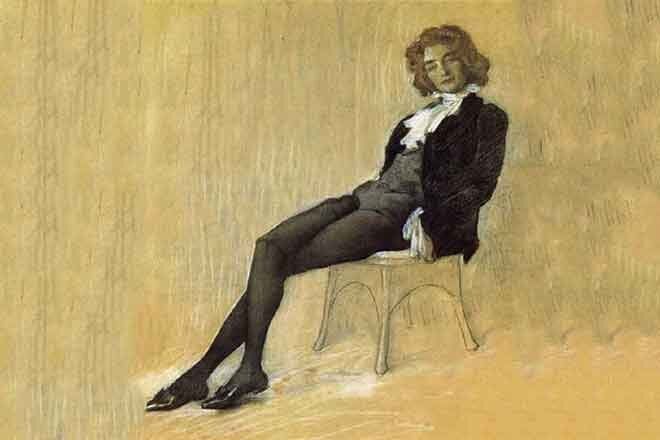
Open Marriage
Zinaida had a long-term relationship (which began in Russia and continued in exile in Paris) with a family friend and writer, Dmitry Vladimirovich Filosofov (1872–1940). She also had a passionate and tumultuous affair with English baroness Elisabeth von Overback (1870–1919), whom she met in 1898 while vacationing in Sicily (in Taormina). When faced with a choice—either to leave her husband or enter into a new same-sex relationship with the baroness—Zinaida didn’t hesitate for a moment. She never even considered leaving Merezhkovsky. Thus, their "open marriage" continued despite all of Zinaida’s affairs and seemed to function perfectly well. Merezhkovsky, as evidenced by his vast and impressive body of work, was wholly devoted to his writing, and Zinaida was always there for him, selflessly and dedicatedly. According to Zinaida herself, the "initial erotic charge" between the spouses didn’t last long. Dmitry soon became completely absorbed in preparing and writing books, and that fulfilled him, while for Zinaida, eroticism and sexuality played an important role in affirming her ego. She didn’t hide her vanity and self-love regarding her impressive intellectual abilities, and even less her undoubtedly attractive physical appearance. But generally, such relationships among Russian writers, philosophers, and artists were not rare. For example, the great poet Alexander Alexandrovich Blok (1880–1921) saw his wife as a "Solovyevian holy Sophia," with the difference that she remained faithful to him while he had relationships with "other Sophias," only to eventually return repentant to the "embrace" of his wife, who, like a true saint, forgave him everything.
One of the most significant poets of Russian symbolism, Valery Yakovlevich Bryusov (1873–1924), wrote novels about the love triangles in which he lived, turning the participants of these relationships into characters in his literary works, claiming that he needed to "live through" everything personally to be able to "authentically" convey the story. The Merezhkovskys, on the other hand, incorporated the mystical teaching of the Trinity into their life and marriage, which Nikolai Berdyaev (1874–1948) called a "bizarre parody," a blasphemous interpretation bordering on heresy: a union of Christ (Merezhkovsky) and Antichrist (Zinaida). To be somewhat ironic, this had quite practical implications: Zinaida literally applied it by including Filosofov, their family friend and lover, almost equally into their marriage. Moreover, every member of their "union," which should also include the writer Vladimir Zlobin (1894–1967) as the secretary of the Merezhkovsky family, had their own ideas and dreams. While Merezhkovsky wrote volumes of books, including his trilogy The Unknown Christ and biographies of great and significant artists like Leonardo da Vinci, Dostoevsky, and Tolstoy, to anticipate "humanity of the third millennium," Zinaida did everything to attract as much attention as possible to her husband’s work, both in cultural circles and beyond. Simultaneously, using modern marketing techniques, she promoted her own "image and work," seeking recognition beyond her husband’s shadow, which didn’t bother her since she genuinely admired him. Yet, knowing her undeniable talent, she sought her own space for acknowledgment and appreciation of her poetry.
Their lifestyle, while shocking to many, equally fascinated a minority, especially because both spouses were authentic and extraordinary personalities whose literary works attracted and excited every true connoisseur and lover of written art. Moreover, Zlobin, their secretary, and interpreters of her literary work, like Temira Pachmuss, claimed that Zinaida was the "true" author of the metaphysical-historiographical "architecture" of their lives and much of their literary work’s structure. But since she knew she didn’t possess the "literary power and skill" of her husband, through sheer willpower and inexhaustible "volcanic energy," she greatly shaped his work according to her ideas.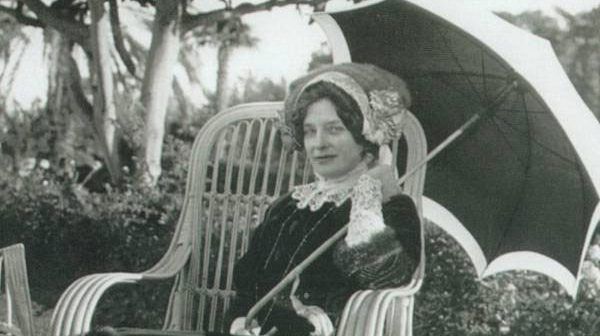
Literary Talent
Georgy Valentinovich Adamovich (1892–1972), who dedicated much of his literary research to studying Merezhkovsky, claimed that while Zinaida emotionally and spiritually identified with her husband’s writing, she also reflected her own "unshakable narcissism" in his genius. Thanks to their shared life, she fanatically pursued "pure spirituality" and art. But if she had tied herself to an anarchist terrorist or a Marxist, she would have adjusted her writing with the same fervor to those "values." Perhaps this is too harsh a judgment, but her "Orthodox asceticism" was deeply embedded in her spirituality, despite the various (a)theistic experiments and phases she went through. The truth remains: whatever she undertook, Zinaida would become the "uncrowned queen" of the environment and world she lived in. When criticized for writing "obscene verses," she convinced those around her that she was "truly religious," albeit in her own unique way. To those in her circle who characterized the Bolshevik revolution and its "revolutionary demons" as "God’s will" and a punishment for "Russia’s betrayal of God," she fiercely responded: "If this is God’s will, let’s rebel against God."
Her life with Merezhkovsky only strengthened her original literary talent (she had been writing amusing poems about her parents and sisters since she was seven years old) and redirected her efforts toward poetry. Often overlooked is the fact that she also wrote numerous critiques and short prose works, including several novels. Her diary entries from the time of the Russian Revolution, covering the Bolshevik dictatorship and the brutal civil war between the "Whites" and the "Reds," are especially significant, as they provide a "powerful, authentic picture of an era of unimaginable tragedy and a bloody political experiment the world had never before seen." For Zinaida, no obstacle was insurmountable on her path. Adamovich confirmed that Zinaida genuinely believed in literature but approached writing differently from her husband. Her personal motto was fides quia creditur—faith because it is believed, rather than fides quae creditur—the content of faith. Merezhkovsky’s work was a great personal inspiration and motivation for her, without a doubt. However, this didn’t mean she aspired to mimic him. On the contrary, she was too strong a personality to settle for that. Her "flirting" with overt sexuality (ranging from an exaggerated femme fatale to a strictly masculine appearance and "male" clothing) was simply a tool to make a certain context more alive and impactful in its time and leave a stronger impression.
Her literary work continues to be reinterpreted in various ways today, but it is undoubtedly complex and authentic, presenting a significant challenge for newer and different interpretations. Today, it is experiencing a strong revival and rehabilitation, especially within the framework of queer culture. Zinaida, both as a person and through her works, is undergoing a renaissance, regardless of what one may think about the values of this long-suppressed "civilization," which, despite possible objections, criticism, and the misunderstanding of much of the public, holds its own significance, importance, and creative merit.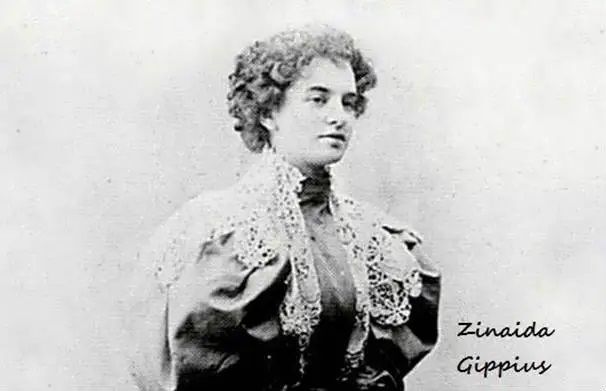
Christian Mysticism
Zinaida Nikolayevna Gippius was born on November 20, 1869, in the small town of Belyov (Tula Province). Her father, Nikolai Romanovich (a lawyer by profession), who suffered from the then-incurable tuberculosis (and passed away relatively young), was a high-ranking official in the local/provincial administration. Later, he was appointed president of the court in the city of Nizhyn (Chernihiv region), where Zinaida began attending school at the renowned Gogol Institute. The Gippius family belonged to the russified German nobility, who had migrated to Moscow from eastern Germany as far back as 1515 and occupied high positions in Tsarist Russia over the next three centuries. Due to her father’s work, the Gippius family often relocated (Kharkiv, St. Petersburg, Saratov), so Zinaida and her sisters received most of their primary education from private tutors. When it was time for secondary education, her parents sent Zinaida to an elite girls’ boarding school in Kyiv, where her behavior "drove her teachers mad." Dissatisfied with the "stale, smelly atmosphere of the school," she returned home. She resumed her education privately, and after her father’s death, the family moved to Moscow, where her mother enrolled her in the renowned Fischer Girls’ Gymnasium, where she soon gained a reputation as one of the "most talented" students, excelling particularly in mathematics and classical languages.
Unfortunately, Zinaida’s health began to deteriorate, and she was soon diagnosed with tuberculosis. Fearing that the disease might spread to the other sisters, her mother sent Zinaida to her wealthy brother Alexander in Tiflis (Tbilisi) so that the mountain air could aid her recovery. Uncle Alexander grew fond of his "extravagant niece" and rented a dacha in the village of Borjomi just for her, where she continued her treatment and education with the help of private tutors. Feeling lonely, Zinaida devoured books (besides her husband’s work, her lifelong fascination and inspiration was Dostoevsky). Sensitive as she was, she began to write poetry intensely, keeping up with everything being published in St. Petersburg and Moscow in the field of poetry. To provide her with some semblance of a social life, her uncle often invited prominent, mostly younger, writers, musicians, painters, actors, and artists to their home. He hosted gatherings at the dacha, where she met Merezhkovsky, who was vacationing in Odessa at the time, visiting Sukhumi, and responded to the invitation from Zinaida’s uncle, with whom he had a friendly relationship. A great love sparked at first sight between the two young people (Zinaida was 19 at the time), he proposed to her, and from then on, they were inseparable.
Upon arriving in St. Petersburg, where the young couple decided to live, Zinaida began publishing her poems, which she had been writing since her youth. She became actively involved in the literary life of the Russian metropolis, which at the time was one of the most exciting and vibrant cultural scenes in Europe. Together with her husband, she frequented various literary-philosophical circles and participated in discussions. She was especially a frequent and welcome guest at the salon of Sergey Pavlovich Diaghilev (1872–1929), a great connoisseur of visual arts and ballet, later the renowned choreographer and impresario of the famous Russian ballet group he founded in 1909 in Paris, where he lived from 1905 until his death. From 1899 to 1901, Zinaida, under the pseudonym Anton Krainy, contributed articles, critiques, reviews, and essays to the magazine World of Art, which Diaghilev founded. He often remarked that he had "never met such a beautiful and intelligent woman" as Zinka (as her friends affectionately called her). Later, in 1903–1904, she continued writing for the esteemed journal New Path, where for a time she "showed an inclination towards some socialist ideas," influenced by well-known 19th-century revolutionaries like Mikhail Bakunin and Debogory-Mokriyevich. However, these were mere episodes in her creative development, as she never fully escaped the "radiance of Christian mysticism," even when she fiercely confronted the "foundations of Orthodox Christianity."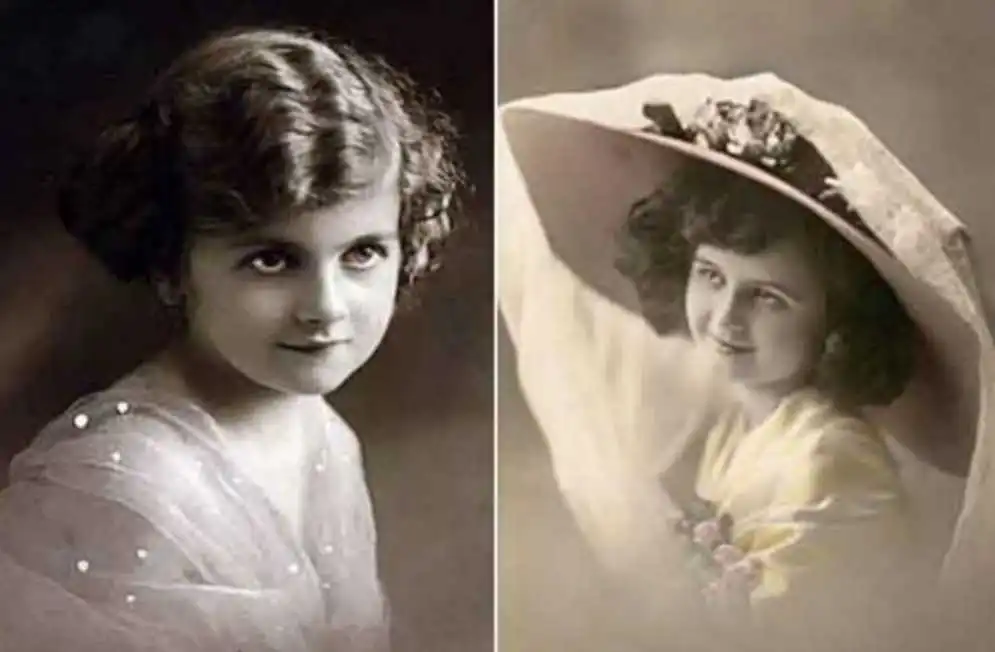
In Exile
From 1898, she published several poems and stories and wrote the novel The Victors, as well as the play Sacred Blood (1901), in which she was among the first, if not the first, in Russia to use "new, free verse." Later, in 1916, her play The Green Ring was successfully performed at the famous Alexandrinsky Theater, directed by the renowned Vsevolod Meyerhold (1874–1940). However, due to the ongoing war and the revolutionary ferment in the country, it soon faded into obscurity and was never performed again in Russia or the USSR, remaining forgotten to this day. In 1904, she published Collected Poems, written between 1889 and 1903, which many, including leading literary critic Innokenty Annensky (1855–1909), considered the epitome of "authentic lyrical modernism," marking an important date in the development of Russian poetry and literary history. For Valery Bryusov, who adored Zinaida’s poetry, it was "proof of the power and grandeur of lyrical expression," and he especially praised her after she published her second collection Collected Poems (1903–1909) in 1909.
In 1911, she published the novel The Devil's Doll, in which, through the story of the main character, Yuri Dvoyekurov, she explored what happens to a man who openly denies the existence of God, lives solely for himself, and cares nothing for tomorrow. He symbolizes the soulless man who will dominate the society of the future, and today we can clearly see how accurately and presciently Gippius anticipated the "new age" and new social trends, not only in Russia but globally. In 1912, she published the short story collection Moon Ants, followed by the novel The Tsarevich in 1913. Just before fleeing Russia, she published Last Poems, 1914–1918 in Petrograd. Fearing for their lives after learning they were on the Bolshevik regime’s "hit list," she and her husband fled Russia in 1919, after discovering that they were on the "hit list" of the new authorities as outspoken critics and opponents of the Bolshevik regime, the Merezhkovskys emigrated in dramatic circumstances. They fled through Minsk and Warsaw and eventually made it to Paris, where they would never return to their homeland. Both are buried at the famous cemetery of Russian émigrés, Saint Genevieve des Bois, near Paris, where notable figures such as Nobel laureate Ivan Alekseyevich Bunin (1870–1953), philosopher Sergey Nikolayevich Bulgakov (1871–1944), and renowned film director Andrei Arsenyevich Tarkovsky (1932–1986) are also laid to rest.
Initially, upon arriving in Warsaw, Zinaida and Dmitry intended to stay there, believing that from this close proximity to Russia, they would more easily and quickly witness the collapse of the Bolshevik regime, which they thought wouldn't last long, and return home. However, they grew dissatisfied with the "anti-Russian resentment" prevalent among the Poles, particularly the policies of Marshal Józef Piłsudski (1867–1935). So, they "packed their bags" and settled in Paris.
While in exile, Zinaida published the first volume of her "Poems" in Berlin in 1922 (or as she called it, "a poetic diary from 1911 to 1921"), followed by a second volume titled Radiance in Paris in 1938. In 1925, she published an interesting book of literary portraits, Living Faces, in which she vividly described figures like Bryusov (though she criticized him for "surrendering" to the Bolsheviks) or Vasily Vasilyevich Rozanov (1856–1919). She harshly condemned figures like Blok, Andrei Bely (1880–1934), and Sergei Alexandrovich Yesenin (1895–1925) for "bowing before the Antichrist of Bolshevism" or becoming "fellow travelers" of the communist revolution. At the same time, she also sharply criticized the "dull, exilic Russian nationalism," which indulged in false hopes of restoring tsarist autocracy and its glorification. According to Zinaida, the reasons for Russia’s downfall and the ensuing tragedy should be sought in the elitism and backwardness of the former imperial system.
In the fall of 1928, she and her husband participated in organizing the First Congress of Russian Émigré Writers in Belgrade, under the patronage of King Alexander Karađorđević (1888–1934). On this occasion, Zinaida received the Order of Saint Sava, Second Class, for "outstanding contributions to the development of Slavic cultures," while her husband received the same order, but First Class. This didn't sit well with Zinaida, leading to a scandal when she publicly protested in front of the king over the matter.
In 1938, Zinaida launched an almanac Review in Paris, but it had a short lifespan. The Second World War was about to begin, and under such conditions, it was difficult, almost impossible, to secure funding for such an expensive project in France.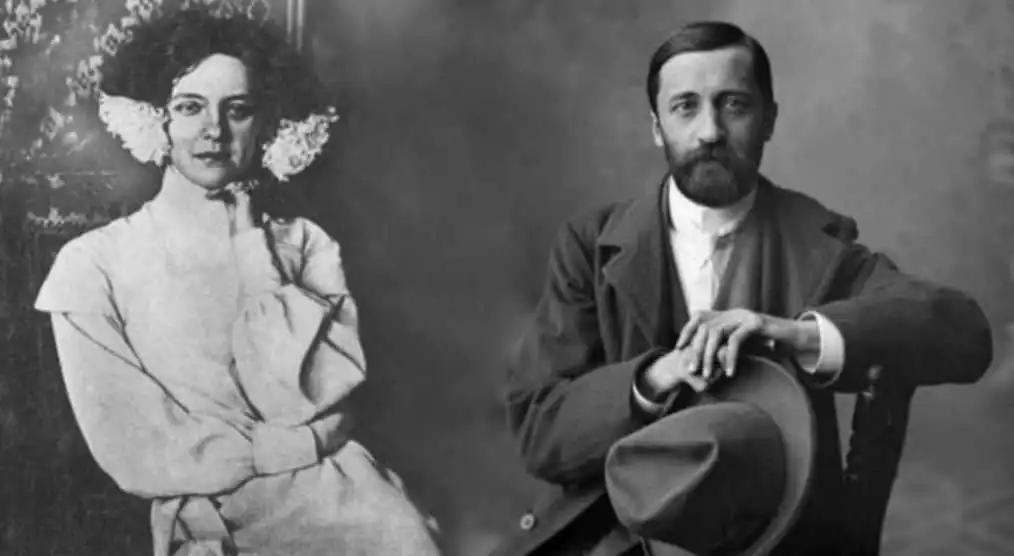
In the World of Symbols
The Merezhkovskys lived modestly in Paris, dedicated to daily, almost exhausting work. At Zinaida’s initiative, in 1925, they established a salon in their home, a literary-philosophical society called “Green Lamp” (active until 1940), which became a gathering place for the Russian intellectual elite in exile, including Ivan Bunin, Nikolai Berdyaev, Mark Aldanov (1886–1957), and Vladislav Khodasevich (1886–1939). During this period, she also maintained extensive and interesting correspondence with the well-known revolutionary Boris Savinkov (1879–1925), philosopher Berdyaev, the patriarch of Russian historiography and liberal politician Pavel Milyukov (1859–1943), writer Nina Berberova (1901–1993), and others, which still needs to be organized and critically processed.
After her husband passed away in 1941, she began writing a “great” book about him and his work, but she did not finish it. She died on September 9, 1945, in Paris, in material poverty, full of bitterness and despair. Before that, “exhausted by illness,” she attempted suicide. As she said before her death, she felt infinitely “old, tired, abandoned, and lonely,” or as she wrote in one of her last poems: “No one has needed me for a long time, nor do I need anyone anymore.” A few years later, in 1951, although unfinished, the book about Merezhkovsky was published (in Germany and France), revealing numerous little-known details about his biography and their shared life and work, as they undoubtedly complemented each other strongly. Until perestroika, Zinaida Gippius’s works were not published in the USSR, and even then only selectively; her “Selected Works” have so far been published only in Munich, in the early 1970s.
Zinaida Gippius, along with Andrei Bely, Fyodor Sologub (1863–1927), Alexei Remizov (1877–1957), Alexander Blok, Innokenty Annensky, and Valery Bryusov, was a kind of emblem of Russian Symbolist poetry and culture at the turn of the 19th to the 20th century. One of the most prominent Symbolists, Konstantin Balmont (1867–1942), claimed that “a Symbolist sees his dream in reality, looks at life as if from a window, only with the difference that this window is turned inward.”
When asked if it was shameful to be a decadent (since many critics labeled Symbolists as decadents), Sologub responded: “Symbolism arose from great and deep suffering, but the masses have never understood this, nor will they; however, without this sorrow and suffering, society cannot progress.” Merezhkovsky reduced Symbolism to a conflict between materialism and idealism, believing that both worldviews must constantly confront each other if we care about the truth at all.
Russian Symbolists defined the concept of a symbol as a construct of “the earthly and the heavenly,” a connection achievable only through intuition. For Bryusov, Symbolist poetry hinted at meaning, while for Zinaida, it was a fusion, a way of life and thought. She asserted that the Symbolist poet is a prophet and creator of a new life, because only through art is it possible to return to and access the realm of the soul, and thus the meaning of aesthetic existence is found in the world of allegories and symbols.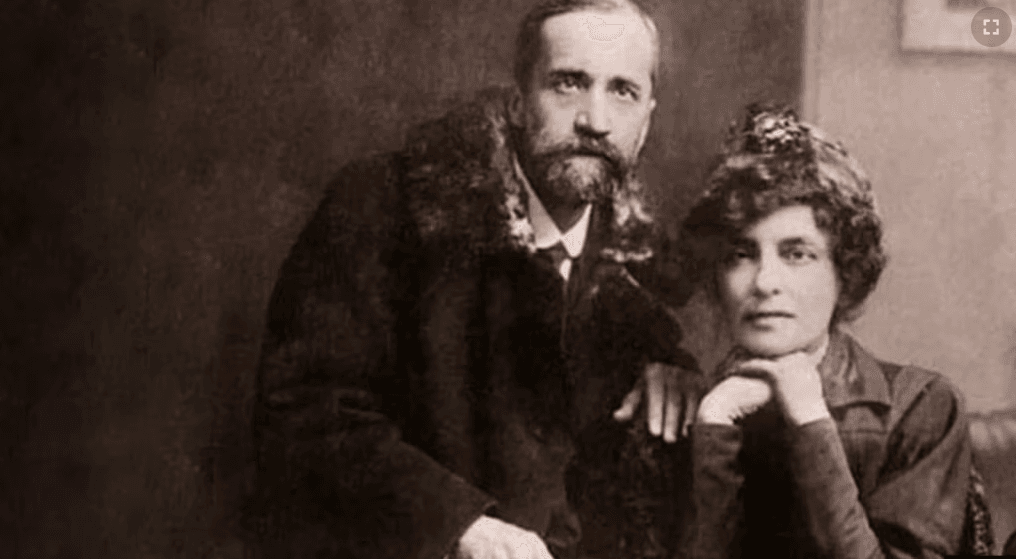
“Petrograd Diaries”
However, Zinaida’s diaries, which she kept from the beginning of World War I until her emigration in 1919, hold special importance, not only literary but also historiographical. Unfortunately, only a small part of these extensive records, the so-called “Black Book,” has been preserved and later published in exile under the title “Petrograd Diaries.” She wrote them horrified by the wartime chaos in Russia, the bloody October Revolution, and the brutal Bolshevik terror. As she herself says:
“The diaries described that early, grotesque phase of Bolshevik rule, which would soon turn into something unimaginably worse. Daily searches by the Cheka, ubiquitous hunger, unbearable winters without fuel, arrests, psychological and physical torture, mass executions of all those suspected of being or potentially being enemies, revenge, looting, spiritual genocide without precedent…”
Before the revolution, she associated with supporters of bourgeois, liberal parties, such as Alexander Kerensky (1881–1970), who later became the head of the provisional government until October 1917, as well as with those on the left, like Maxim Gorky (1868–1936), whose “uneven” literary talent she still respected. However, she openly despised Lev Trotsky (1879–1940) and Anatoly Lunacharsky (1875–1933), the commissar for culture in Lenin’s government. She had a good insight into everything that was happening at the time, and she analyzed, commented on, and recorded it in her diary with a series of brilliant observations.Before fleeing Russia, she asked an (unnamed) friend to hide (bury?) two thick notebooks of her diaries (several thousand handwritten pages). At the last moment, she decided to take a small so-called “Black Book” (sewn into her winter coat), even though she was aware that if the Red Army soldiers caught them and found the hidden “compromising” notes, they would be shot on the spot. She never found the buried diaries again, but she was more than surprised when, in 1927, she received a package in Paris from Petrograd/Leningrad containing part of her diary notes (the manuscript of the so-called “Blue Book”), which she had completely forgotten about in the rush before fleeing Russia. She never found out who found and hid them; the sender remained unknown. Later, she published the completed “Petrograd Diary,” one of the most striking testimonies about the days before, during, and immediately after the October Revolution.
It is undoubtedly difficult, after everything described, to even approximately define who Zinaida Gippius really was. However, it seems to me that the best answer can be found in her portrait in a man’s suit, sitting with crossed legs, created (in 1906) by Merezhkovsky’s friend, the painter, Belarusian Jew, Leon Bakst (1866–1924), who later also emigrated. From this portrait, with its seductive gaze, radiates Zinaida’s entire poetic personality and sensitivity, physical sensuality, and intellectual brilliance that characterized this original and exceptional woman in every respect, who did not reconcile (even) with her own femininity, always seeking more and different.
NoviList.hr, September 27th, 2024.
Islamic Lietrature and Homoerotism
For centuries, literature from Islamic regions, especially Iran, celebrated male homoerotic love as a symbol of beauty, mysticism and spiritual longing. These attitudes were particularly pronounced during the Islamic Golden Age, from the mid-8th to mid-13th centuries.
Scholars Discover New Poems from Ancient Greek Poetess Sappho
Only a few poems of the Greek poetess Sappho’s work have survived but thanks to a leading scholar’s investigation two new works have just been recovered—and gives experts hope to find more.
Leposava Mijušković, A Forgotten Writer
Leposava Mijušković, a Forgotten Writer Who Wrote About the Love Between Two Women