
Centre for Queer Studies
CKS
The Center for Queer Studies is a citizen association in Belgrade, Republic of Serbia, Europe, officially registered and established in the year 2010 with the aim of popularizing, making visible, and establishing a broader social and academic presence of queer theory and culture, as well as of authors who engage with it.
Contact: kvir.studije@gmail.com
Research

Pride Parade and the LGBT Population (2014)
A four-month research project was conducted, examining the attitudes of LGBT individuals towards the Pride Parade through questionnaires (quantitative part of the research) and focus groups (qualitative part). The questionnaire was available online and in print, consisting of 52 questions. Four focus groups were held: two in Belgrade and one each in Novi Sad and Niš. The research aimed to gain a clearer understanding of the main tendencies in the attitudes of the LGBT population regarding the Pride Parade as a form of political struggle for LGBT rights, as well as other issues related to activism and the daily lives of this population in Serbia.
The publication is available for download (in Serbian).
Homophobia and Internalized Homophobia in Serbia, Qualitative Research (2016)
The research esearch was conducted using semi-structured in-depth interviews to explore the attitudes of heterosexual and homosexual respondents towards homosexuality. A total of 44 interviews were conducted in five cities: Belgrade (16 interviews), Novi Sad (8), Niš (8), Subotica (6), and Kragujevac (6), resulting in over 73 hours of audio material and over 1000 pages of transcripts. The purpose of the research was a deeper and more detailed investigation of the motives, fears, and prejudices underlying homophobia and internalized homophobia, as well as determining similarities and differences in the adoption and reproduction of homophobic attitudes among heterosexual and homosexual individuals, laying the groundwork for further in-depth research on these topics.
The publication is available for download (in Serbian).
Art
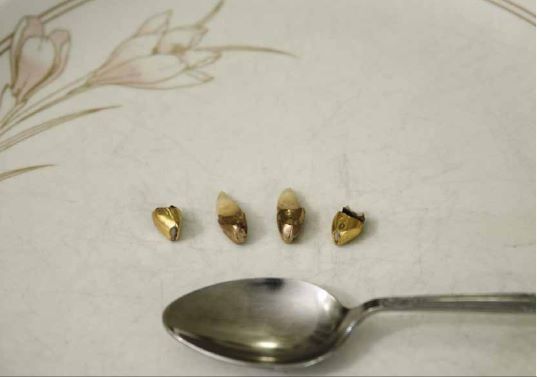
Counterpublic: Recreating Communities, Queering Nationalisms (2013)
We brought together individuals involved in queer theory and activism in three different Balkan countries - Macedonia, Serbia, and Croatia - and discussed the possibility of public action aimed at subverting (hetero)normativity, primarily through the use of art. As a result, three actions were initiated in the aforementioned countries - in Serbia, "subversive postcards" were sent to the addresses of numerous public figures (politicians, public figures, media, etc.), questioning some of the current social transitional-crisis phenomena such as poverty, homophobia, etc.; in Macedonia, a performance called "Queer Glory" was organized in a shop window in the city center, parodying traditional glory, and in Croatia, there were various actions, including participation in public debates on Pride and homophobic presentations by certain conservative "scientists" countered with scientific arguments.
Documentary Film Life Without the Mask (2016)
Directed by: Aleksandar Stojaković
Duration: 1h 25 mins
Dragan, Nataša, Saša, Kristina, and Darko come to Belgrade from smaller and closed communities in an attempt to live their true identities. Their confessions are touching, warm, deep, and sincere. Their lives are hidden behind a mask, longing for something better, beyond the mask.
Film is available on YouTube: Life Without the Mask
Great Figures of Science and Art and Their Neglected (Homo)sexuality (2017)
We presented six authors - Alan Turing (mathematician and cryptographer), Michel Foucault (philosopher and historian), Jean Cocteau (writer, director, and painter), Andy Warhol (pop artist and writer), Pyotr Ilyich Tchaikovsky (composer), and Pier Paolo Pasolini (director and writer) - through discussions, film screenings, lectures, advertisements in the weekly magazines NIN and Vreme.
Audio recordings of lectures (in Serbian) are available on the YouTube channel of the Center for Queer Studies.
Publications
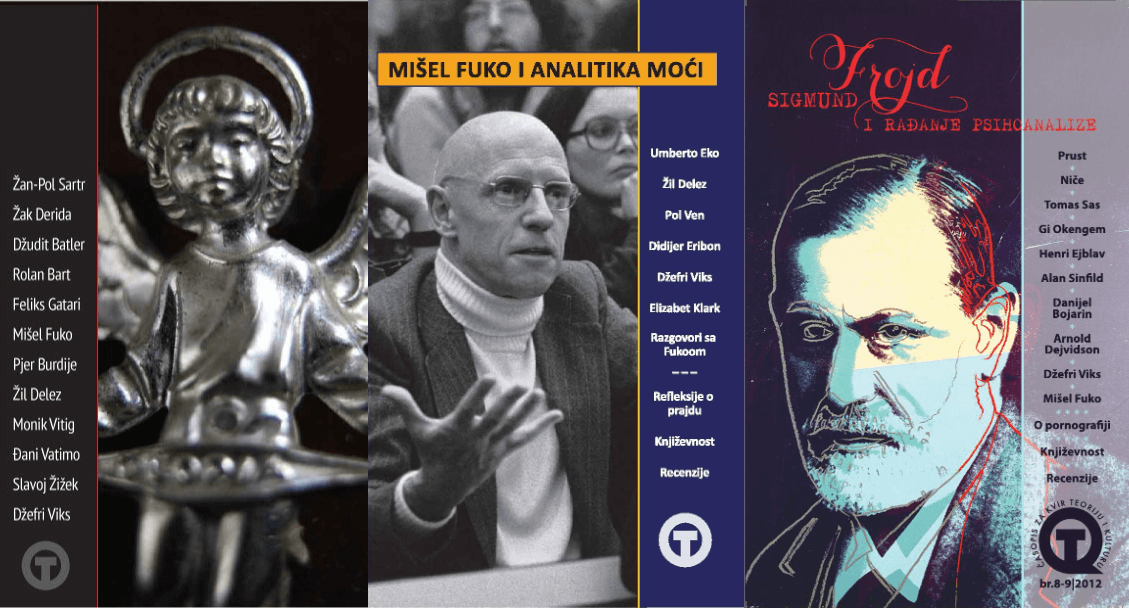 Journal of Queer Theory and Culture QT (2010 – 2012)
Five issues were published:
- The Nature of Desire and Society of Transgression
- Introduction and History of Crime
- Michel Foucault and the Analytics of Power
- Jacques Lacan and the Challenge of Psychoanalysis
- Sigmund Freud and the Birth of Psychoanalysis
Other publications:
- Pride Parade and the LGBT Population, ed. Aleksandar Stojaković 2014.
- Homophobia and Internalized Homophobia in Serbia, Qualitative Research, ed. Aleksandar Stojaković 2016.
- At the Crossroads of Oppression: Intersectionality & LGBT Activism in Croatia and Serbia, eds. Bojan Bilić, Sanja Kajinić 2017.
- Giants of Art and Science and Their Neglected (Homo)sexuality, ed. Dušan Maljković 2017.
- Across the Rainbow to Europe: LGBT Activism and Europeanization in the Former Yugoslavia, ed. Bojan Bilić 2018.

Madness and Marginalization in Serbia Today (2020)
The project identified some of the changes in defining and treating "madness" in the 21st century and sought to establish the position of certain subjects in Serbia marked by (mental) pathology: users of psychiatric services, women, trans and intersex individuals, and an increasing number of depressed people. By delving into the history of psychiatry, psychoanalysis, and other "mental health institutions," we shed light on the mechanisms of social power through which the line between healthy and abnormal is drawn. We amplified the voices of both academic workers and the theoretical background of the situation, as well as representatives of these groups/movements and their personal experiences of how being seen as "disturbed" affects their lives. The goal was to open up relatively new topics for Serbia and their destigmatization, as well as to create a knowledge base and a platform for networking various social factors for further activist work and policy changes towards "mad" people.
Lectures:
- Jelena Zulević Political Construction of Psychopathology and Post-Psychiatry
- Lidija Vasiljević Myths of Women's Diseases and Their Use Throughout History
- Dušan Maljković Homosexuality, Psychosis, Freud: The Case of Dr. Schreber
- Nina Krajnik Madness and Freedom: From Repression to Neoliberalism
- Zorica Mršević Depathologization of Trans Individuals
- Predrag Šarčević Psychopathia Transsexualis, or About the Past and Future of an Illusion
- Andrej Cvetić Madness of Political Spectacle in the 21st Century
- Sonja Sajzor On Transgenderism and Transphobia
- Nada Sekulić On Disguise
Bonus: Two Video Interviews (in Serbian):
- Lepa Mlađenović, Lesbian and Antipsychiatric Activist
- Milanko Govedarica, PhD, Professor of Philosophy and Philosophy of Psychoanalysis
Queer Studies
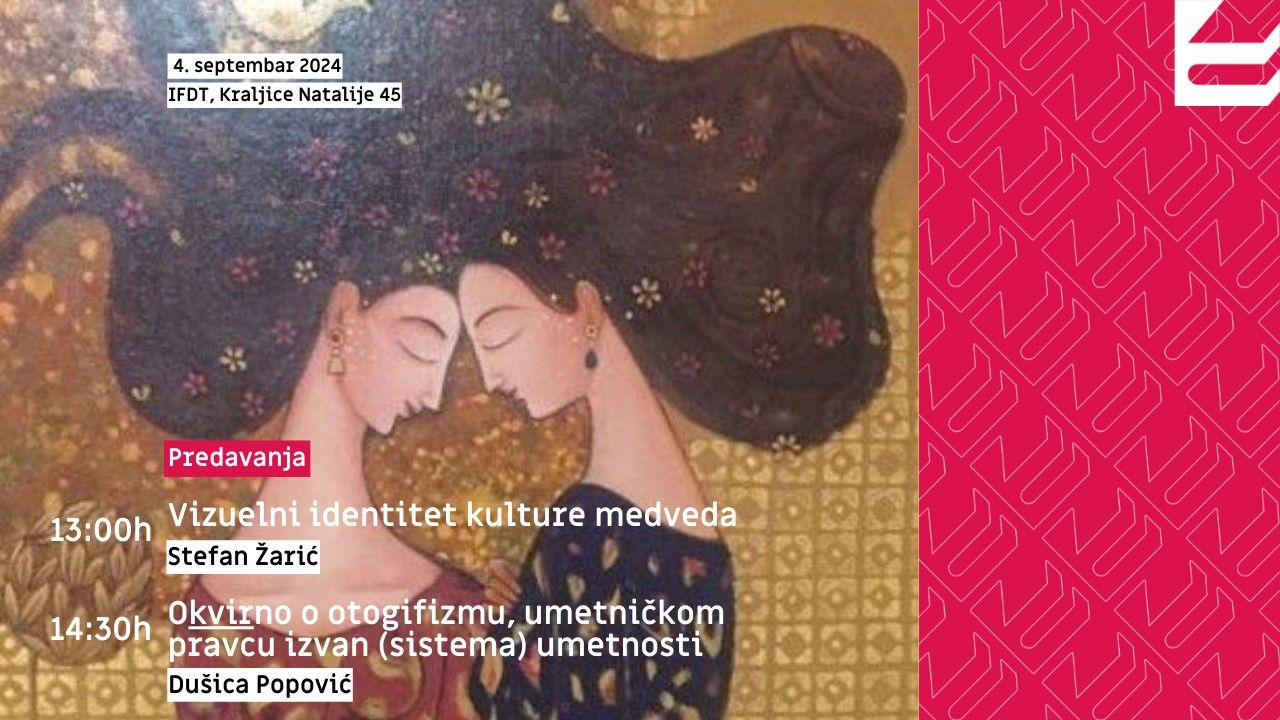
Pride Queer Studies 2024
IT'S BETTER WITH QUEER CULTURE!
Lectures and discussions on queer art and culture:
- Stefan Žarić: Visual Identity of Bear Culture
- Dušica Popović: On Otogryphism, an Artistic Movement Outside (the System of) Art
More details are available at the link.
Pride Queer Studies 2023
This lecture series attempted to reflect on some of the burning questions arising in the so-called culture wars, recently waged in Serbia as well. Among other things, it addressed the "trans issue," which often debates the (im)mutability of gender, as well as the scope and agenda of trans activism. We wanted to establish what gender is in the context of medical science and its recent results, as well as how attacks on the trans community reiterate pseudo-arguments we have already heard in resistance to the feminist and gay movements. Also, we move beyond the framework of "Western whiteness" to establish the possibilities of a non-European third gender. We concluded with a discussion on specific models and consequences of regulating prostitution in Nordic countries and New Zealand, rejecting the banal siding "for" or "against" sex work. We attempted to show that the way out of turbulent - often passionate and oversimplified debates - lies in prolonged meditation on scientific analyses that indicate the complexity of these problems that we cannot resolve overnight, lightly, and arrogantly.
Lectures:
- Marko Marjanović Medical Aspects of Sexual Development Diversity
- Nada Sekulić Third Gender in Pre-Hispanic Cultures of America
- Sonja Sajzor Transformative Power of Trans Liberation – Common Goals of Progressive Movements
- Dragana Pejović Current Models of Legal Regulation of Prostitution: Nordic Model vs. New Zealand Model
Pride Queer Studies 2022
This lecture series took place within the framework of EuroPride, and all presentations were in English, due to the presence of guests from various European countries. It addressed racism and whiteness, the history of same-sex relationships, analyzed the local drag scene and its (re)presentations, and the intersection of feminism and trans activism, the emergence of trans-exclusive radical feminism (TERF), as well as controversies regarding sex work, its history, and its place in feminist and labor discourse. Speakers were from Serbia, Montenegro, Croatia, and Australia.
Lectures:
- Jelena Savić Queer as Whiteness in the Context of European White Supremacy
- Slobodan Marković Contribution of Sexology and Cultural Anthropology to Understanding and Acceptance of Same-Sex Relationships in Western Societies
- Jill Diane Pope Portion of (Post)Socialist Reality: Belgrade Drag Performances as Haunting Narratives
- Jovan Džoni Ulićević Transfeminist Solidarity – Future of Resistance to Anti-Gender Movement
- Stipe Nogalo TERF Ideology – "Feminist" Wing of Contemporary Fascism
- Nina Čolović Brief History of the Discussion on Sex Work
- Karolina Hrga Social Reproduction and Sex Work
Queer Studies 2019
Initially held at the Faculty of Philosophy in Belgrade, queer studies moved online due to the onset of the COVID-19 pandemic.
Lectures:
- Ivan Milenković Michel Foucault: Genealogy as Deconstruction of Naturalness
- Jelisaveta Blagojević Queer Theory and Post-Structuralism: Judith Butler and Gender Performativity
- Asja Lazarević Female Masculinity: Threat or Homage to Male Masculinity - Limits of Gender Denaturalization
- Slobodan Marković History of Euro-American Masculinity between Uniformity and Postmodern Polymorphism
- Nađa Bobičić Feminism, Queer and Left: Alliances
- Andrej Cvetić Digital Pornography and NoFap Movement or Why We Abstain from Sex?
- Dušan Maljković Homosexuality, Eros and Thanatos: One Reading of Sigmund Freud's Lecture "The Sexual Life of Man" (1915)
- Nina Krajnik Homo-Analysts: Homosexuality in Psychoanalysis from Freud to Lacan
- Miloš Jovanović Moral Condemnation of Homosexuality in Orthodox Christianity
- Stefan Šparavalo Non-Heterosexuality and Non-Binary in Jewish Sacred Texts
- Predrag Šarčević Clinical Culture and the 'Sex/Gender System'; Social History of Medical Interpretations of Intersex Conditions
- Nada Sekulić Third Gender in Pre-Hispanic Cultures of America
Queer Studies 2012 – 2015
Three courses of 24 lectures (per course) in the field of queer studies were held at the Institute for Philosophy and Social Theory in Belgrade.
Cultural Exchange
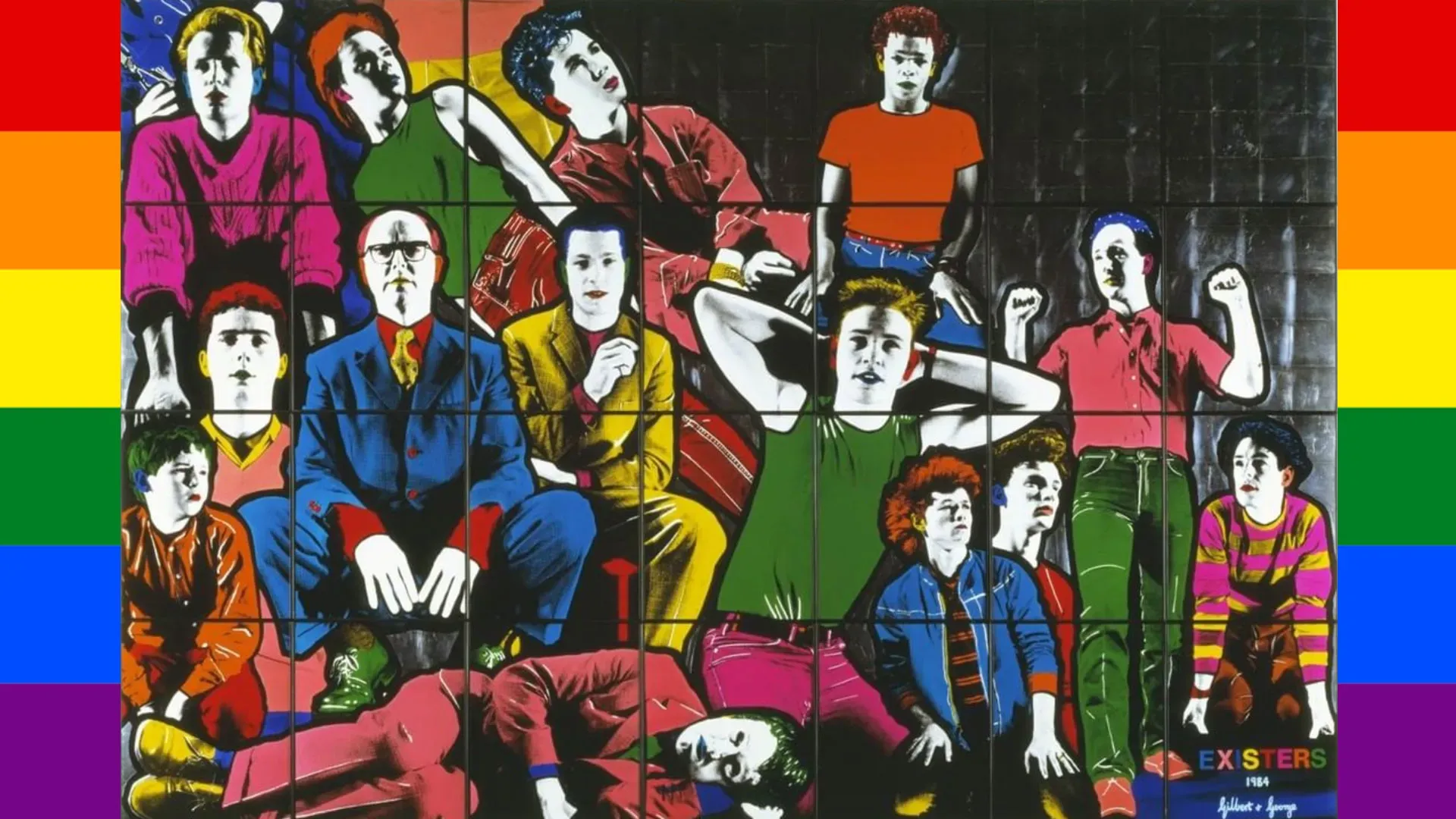
Meetings on Balkan Cultural Exchange and Regional Queer Web Portal (2024)
Attendees:
- Manja Veličkovska, Coalition MARGINS, Skopje, NORTH MACEDONIA
- Azra Ćulov, OC BIH Pride March, Sarajevo, BOSNIA AND HERZEGOVINA
- Matej Vrebac, Sarajevo Open Centre, Sarajevo, BOSNIA AND HERZEGOVINA
- Ljubomir Faizov, Helsinki Committee, Skopje, NORTH MACEDONIA
- Dušan Maljković, Center for Queer Studies, Belgrade, SERBIA
It was noted that there is a lack of good exchange in the BHS region and North Macedonia regarding cultural content related to national Pride events and local queer cultural activities. Regarding the connection of queer cultural workers, the following decisions were made:
- A special mailing list of the attendees will be created, with the gradual addition of new members.
- The attendees will join the already existing regional mailing list of the Center for Queer Studies, named RAZOTKVIRIVANJE (Queer Unveiling).
Additionally, it was decided that the participants would further map organizations and individuals in the Balkan region who engage in queer culture production and establish contact with them to include them in this initiative.
Regarding the joint website, it was noted that further research is needed into the capacities of regional organizations for this project. Queer Zagreb has, in principle, offered to host and build the first version of the website, which would be in BHS, English, and Macedonian, and later in Albanian.
It is also necessary for each organization from one of the countries in the region to appoint one person, on a freelance basis, to work on the site as a journalist/editor, as well as one person to manage social media and another for technical website administration.
Collaboration and information exchange with already existing queer portals in the region are also important.
There is a need for continuous, multi-year support from foundations.
 Funding
European Union
Open Society Foundation
Office for Human and Minority Rights of the Republic of Serbia
Ministry of Foreign Affairs of the Kingdom of Norway
Embassy of Belgium in Serbia
Marie Curie Fellowship
Heinrich Böll Stiftung
Swiss Agency for Development and Cooperation
Civil Rights Defenders
City, University of London
LGBTI Equal Rights Association for Western Balkans and Turkey
Olof Palme International Center
Embassy of the Federal Republic of Germany
Cooperation
Institute for Philosophy and Social Theory, Serbia
Center for Prmotion of Science, Serbia
XYSpectrum, Serbia
Group "Come Out", Serbia
Belgrade Pride, Serbia
'Sexual and Health Rights of Marginalized Communities', North Macedonia
Queer Zagreb, Croatia
Protocol of Selective Visibility
Marking twenty-five years since the first attempt to organise a Pride Parade in Belgrade (2001–2026).
Dead Inside, But Still Horny!
An Open Discussion on Dating in the Age of Grindr, Hookup Culture, and Mental Health
Queer Studies 2026
Lecture announcements for the first semester.